| "Only dull people are brilliant at breakfast" -Oscar Wilde |
 |
"The liberal soul shall be made fat, and he that watereth, shall be watered also himself." -- Proverbs 11:25 |
"For straight up monster-stomping goodness, nothing makes smoke shoot out my ears like Brilliant@Breakfast" -- Tata
"...the best bleacher bum since Pete Axthelm" -- Randy K.
"I came here to chew bubblegum and kick ass. And I'm all out of bubblegum." -- "Rowdy" Roddy Piper (1954-2015), They Live


Au revoir, y'all....
So Long and Thanks for All the Gefilte Fish
Like White on Rice
Why Did Hillary Clinton Hire a Monsanto Lobbyist t...
Virtual Book Sale
The Man Who Poisoned America
We are privileged to be alive today
The Prodigal Blogger Stops By
Good Times at Pottersville, 3/14/15
Please consider supporting B@B with a donation: There is no gift like the present.
But gifts are nice too:





Mitt Romney, one of the wealthiest candidates ever to seek the presidency, paid nearly $2 million in federal taxes on $13.7 million in income that he and his wife reported last year, his U.S. returns showed Friday. That came to an effective tax rate of 14.1 percent, lower than millions of middle-income Americans but actually more than he had to pay.
Most of Romney's income was from investment returns. That is why his rate was lower than taxpayers whose income was mostly from wages, which can be taxed at higher rates.
It is a measure of just how out-of-touch these people are that Rmoney thinks we're supposed to give him a medal for this. I went back and looked at our tax returns for 2011 and found that we paid 17.9% in federal income taxes last year. Nearly all of our income is salary, not investments, and our only significant deductions are for our ridiculous NJ property taxes and a relatively minimal mortgage interest deduction, given that we are a shade more than eight years into a 15-year mortgage at 4.75%. Mr. Brilliant shuttles from short-term low-paid contract to short-term low-paid contract these days because companies no longer place any value on reliable network adminnistration and technical support, so in any given year he is out of work for part of it. We're not hurting, but we're constantly vigilant, given that my job could be offshored at any time (for all that companies in my industry are starting to bring offshored jobs back to the US, having found that the too-good-to-refuse deals they're being offered by consulting companies aren't that good after all). My attitude towards the expiration of the Bush-originated tax cuts is "You do what you have to do."
But back to Willard. You know you're completely out of touch when your financial guy says this in your defense:
For the year, they claimed a deduction for $2.25 million of their $4.021 million in charitable contributions, said Brad Malt, trustee of the candidate's blind trust.
The Romneys gave $2.6 million in cash to the Church of Jesus Christ of Latter-day Saints, the documents show. They gave just over $2 million in non-cash charitable contributions — including donations of stock holdings in Domino's Pizza, Dunkin Donuts and Warner Chilcott — to a family trust.
They could have claimed more in deductions, Malt said, but the couple "limited their deductions of charitable contributions to conform to the governor's statement (n August, based on the January estimate of income, that he paid at least 13 percent in income taxes in each of the last 10 years."
What Malt didn't say is that Willard has three years to amend his return, so after the election, when presumably he will be the most powerful man in the world, having prevented enough black people from voting to eke out a teeny-tiny win, he will be able to go back and amend his return and pocket another cool 467,000.
How cynical is it to "overpay" your taxes for political reasons (after claiming that anyone who pays more than he has to isn't qualified to be president), knowing full well that you can go back and amend your tax returns and pocket another half-million dollars?
For that matter, what must it be like to be able to forgo a HALF-MILLION DOLLARS for a few months for the sake of your lust for the presidency?
All of which brings us to our friend and colleague jurassicpork, who would give anything to not be part of that 47% that Willard Rmoney loathes so much. It's getting to the end of the month again, and the wolf is at the JPs' door again, since it is another month that no one was interested in hiring an over-50 QC specialist or a sign designer. So if you appreciate the work he does over here when I'm AWOL, pop on over to Welcome Back to Pottersville and throw a few shekels in the kitty. Right now the JPs are faced with a choice of trying to eke out another month in Massachusetts or head south to a place with an even higher unemployment rate and depend on the kindness of family. Whatever decision they make, they'll need money to do it. It's a far more difficult decision than what you're going to do with another half-million after you quietly amend your tax returns.
Labels: double standards, Mitt Romney, taxes

Senate Republicans will press this week to extend tax cuts for affluent families scheduled to expire Jan. 1, but the same Republican tax plan would allow a series of tax cuts for the working poor and the middle class to end next year.
Republicans say the tax breaks for lower-income families - passed with little notice in the extensive 2009 economic stimulus law - were always supposed to be temporary. But President Obama had made them a priority in 2009 and demanded their extension in 2010 as a price for extending the Bush-era tax cuts for two years, and both the White House and Senate Democrats are determined to extend them again.
That sets up a potentially tricky issue for Republicans. They have said they do not want taxes to go up on anyone while the economy struggles to gain altitude, but under their plan, written by Senator Orrin G. Hatch of Utah, the senior Republican on the Finance Committee, about 13 million families would see their tax refunds reduced, and some would see their taxes increase.
"Senator Hatch's amendment would extend tax breaks for the top 2 percent of Americans," Senator Harry Reid of Nevada, who leads the Senate's Democratic majority, said this month. "But it fails to extend a number of tax cuts that help middle-class families get by in a tough economy."
The tax showdown is set for Wednesday, when the Senate will vote on whether to take up Democratic legislation to extend Bush-era middle-class tax cuts through 2013. The motion will need 60 votes to pass, and only if it gets those votes will Republicans be given a chance to vote on their alternative tax plan. The House will vote next week on a similar Republican plan that also allows the 2009 stimulus cuts to lapse.
"The president said if you pass the stimulus, unemployment would never go above 8 percent," said Representative Kevin McCarthy of California, the No. 3 House Republican. "We've had a 41-month experience that that is not true and hasn't been effective. One thing Republicans have always said is that they want a form of accountability."
Under the Democratic plan, tax rates on earnings over $250,000 would snap back to 36 percent and 39.6 percent, the rates paid during the Clinton presidency, from 33 percent and 35 percent. It would also allow the estate tax rate to jump to 55 percent on the value of inheritances over $1 million per individual, $2 million per couple. The current rate is 35 percent on estates over $5 million, $10 million a couple.
The Senate Democratic plan for the estate tax actually takes a bigger piece of qualifying estates than the proposal by President Obama, who wanted a 45 percent rate on inheritances of about $3.5 million, or $7 million per couple. It could cause as many political headaches for some moderate Democrats as the income tax expirations.
Between the income tax expirations, the estate tax provision and a business investment provision that Democrats would limit to small businesses, the Democratic plan would raise almost $82 billion more in taxes in 2013 than the Republican version. But the Democrats' claim to fiscal prudence may be undermined by their decision to maintain the stimulus law's tax breaks, which would cut those savings down to $55 billion. Republican tax aides say the vast majority of the benefits Democrats are seeking to preserve are not tax cuts but checks written by the Internal Revenue Service and sent to the working poor. Given the huge increase in government aid, like food stamps and unemployment benefits, letting some assistance lapse makes sense, they say.
Because in a nation with ready access to guns, it makes sense to take a bunch of white males who have been out of work for four years because corporations demand something that has never, ever existed in business -- certainty -- and yank the rug out from under them. Yeah, that'll work. Take food away from their kids and those lazy white guys (and yes, those are the very people who are planning to vote these people into completely unchecked power), give them guns, grab the popcorn, and watch the fun.
And that's the most disheartening part of this whole election charade we're going through this year -- that even when the Republicans toss off their pretense that their policies, such as they are, will benefit the middle class, there are enough voters who so loathe the idea of a black man in the White House that they'll hand over power to the very people who are now pledging to take for themselves what little these people have left.
Labels: Greedy Republican Bastards, taxes
President Obama will ask Congress to scrub the corporate tax code of dozens of loopholes and subsidies to reduce the top rate to 28 percent, down from 35 percent, while giving preferences to manufacturers that would set their maximum effective rate at 25 percent, a senior administration official said on Tuesday.
[snip]
The administration plan to revamp a corporate code that is widely derided as inefficient and anticompetitive has been in the works at Treasury for two years, and is a priority of Mr. Geithner. Yet he has been preoccupied with crisis management, and is unlikely to see the project through since he plans to leave office after this year.
The proposed overhaul “will help level the playing field for businesses and allow the government to collect needed revenue while promoting economic growth,” Mr. Geithner told a Congressional committee last week, without details.
Republicans and business groups complain that the 35 percent corporate tax rate is among the highest in the world, leaving American companies at a competitive disadvantage. They typically seek a 25 percent rate, with many of them saying that the current tax breaks should be kept in place as well.
Nonpartisan tax analysts consistently find that corporations here on average pay just slightly more than their competitors in other developed countries after exploiting the many tax breaks and loopholes. Recent news accounts have highlighted the low effective rates paid by companies like Google, Boeing and General Electric.
One analysis concluded that 115 of the 500 companies in the Standard and Poor’s stock index paid a total corporate tax rate — federal and otherwise — of less than 20 percent over a five-year period. A study by the Government Accountability Office in 2008 found that 55 percent of American companies paid no federal income taxes during at least one year in a seven-year period it studied.
“Under the current tax system, the United States will soon have the highest statutory corporate tax rate among developed countries, within a system that features a large number of tax expenditures for special interests,” said a senior administration official, who did not want to speak ahead of Mr. Geithner except on condition of anonymity.
“This puts American businesses — especially those in areas like manufacturing that are subject to more intense international competition — at a disadvantage. And this system is also unnecessarily complicated for America’s small businesses.”
Notice that this "senior administration official" said "highest tax rate", not "highest tax." Does Obama actually think that a plan that will result in higher net taxes on corporations will pass muster with Republicans?
And can we please stop this talk about America's small businesses? Mitt Romney is out on the stump referring to small businesses as "America's job creators". But the reality is quite different:
The problem is that not all small businesses are created equal. Businesses just getting off the ground contribute most of the country's job growth, but older small businesses cut as many as they add.
Think Bill Gates and Paul Allen huddled together late nights developing Microsoft, not the corner liquor store.
"I don't want to pick on dry cleaners and restaurants and small manufacturing firms, but they're not a big source of job creation," says John Haltiwanger, an economist at the University of Maryland.
Politicians like to say that small companies create two of every three jobs in a given year. That's less impressive when you consider that almost all the 6 million companies in the U.S. — 99.9 percent of them — are small businesses, with fewer than 500 workers.
What's more, two-out-of-three masks the fact that most small businesses eliminate more jobs than they create in a given year, either through layoffs, closings or bankruptcy.
And many of the rest, the ones that don't shrink or shut down, don't offer much hope for the millions of Americans looking for jobs.
Many small companies — outfits like florists, hardware stores and barbershops — tend to grow with the U.S. population, not faster. So they don't speed the economic recovery the way an exploding new industry might.
According to an August study by two University of Chicago economists, most small business owners just want to be their own boss and never expect to hire more than a few employees.
In fact, the more you study the numbers, the more you wonder what the politicians are getting so excited about.
Haltiwanger and two other economists showed, in a study of millions of companies over 30 years, that small businesses no more than five years old — that's about 40 percent of them — are the only ones that create more jobs each year than they cut.
In 2005, for instance, more than 99 percent of the 2.5 million net new private-sector jobs in the United States came from these startups, according to the U.S. Census Bureau.
But the 60 percent of small businesses that have been around more than five years act as a slight drag on the number of jobs available in the United States. They have cut about 0.5 percent more staff than they have added in a typical year, according to Haltiwanger.
By contrast, big businesses, the ones that get all the headlines for layoffs, have hired more than they have cut — about 0.1 percent in a typical year.
Economist Charles Kenny of the New America Foundation, a nonpartisan research group, goes as far as suggesting that Washington should stop offering certain incentives to small business owners, such as loan guarantees and write-offs on taxes for home offices. He says the money would be better spent subsidizing research and development.
This corporate tax rate has nothing to do with the "small businesses" that evoke images of the small-town lunch counter, barber shop, and candy store. Small businesses these days are the couple in a nearby town who, both unemployed, now run an errand service, or the petsitter who makes an exception and takes care of our cats when we're away because we're longtime customers and I give her an extra five bucks a visit for her trouble. Small businesses are the unemployed tech guy who'll defrag your hard drive for twenty bucks. They're the fourteenth gyro joint to open in the area in the last six months that won't be around in a year because there's just too much competition. Economic recovery doesn't come from these kinds of mom & pop businesses for whom success means you hire two kids to carve up the souvlaki after school for minimum wage.
You've got to love the author of the above article talking about Bill Gates and Paul Allen huddled in the garage, even though he's obviously thinking Steves Jobs and Wozniak. He could just as easily gone back a generation and evoked Bill Hewlett and Dave Packard, but those are the exceptions, not the rule. Those entrepreneurs were able to develop and sell their wares and grow their companies into an America that wasn't racing to the bottom in terms of worker compensation.
And it's into this fantasy, which mistakes Norman Rockwellian and lightning-in-a-bottle success for some kind of norm, that Barack Obama, who has never found an issue in the last three-plus years on which he won't cave to the Republicans eventually, has decided in this election year that the Republicans are right. He's fallen into the notion that if you just let Meg Whitman and Sumner Redstone and Jeff Immelt (who has Obama's ear anyway) pocket ENOUGH MORE CASH, they'll magically trickle it down to us peons in the form of "job creation."
And that gyro joint on the corner? That errand service? That tech guy? They're S Corporations and LLCs. and t sure as hell aren't going to be affected one iota by a corporate tax cut.
I can't wait to see what Obama decides when the Republicans start screaming about how this ocntributes to the deficit. Because he's forgotten. Tax cuts instituted by Democrats? Bad. Only tax cuts instituted by Republicans have the requisite magic fairy dust.
Labels: Barack Obama, corporatism, greed, spinelessness, taxes, wussy-ass Democrats
Eleanor Clift:
Obama has invested so much time demonizing the Bush-era tax cuts for the rich that he has obscured the true narrative of his presidency. Class-war rhetoric aside, Obama is one of the most prolific tax cutters in recent history, with a record that puts him squarely alongside that of George W. Bush.
Crunching the numbers at the liberal think tank the Center for American Progress, analyst Michael Linden found that if one compares the cost of tax cuts in just the first four years of Bush’s term (2001–04) to the first four years of Obama's (2009–12), Obama’s tax cuts are bigger. The value of the Bush tax cuts were about $475 billion in those first four years, or about 1.1 percent of GDP. Obama’s total about $1 trillion, or 1.6 percent of GDP.
Obama has cut taxes to lower levels than Bush did, says Linden. This is because, of course, Obama thus far has extended all of the Bush tax cuts and then cut taxes on top of that. His original stimulus bill in 2009 had $290 billion in Making Work Pay tax cuts. His speech Thursday night before Congress advocated for another $175 billion in payroll tax cuts, which come on top of $110 billion from last December’s budget deal. Speeded-up expensing for business adds another $10 billion or so.
All in all, Obama is responsible for many billions in tax cuts, yet the popular perception is that he has raised taxes.
Because he has sat silently by while allowing Republicans to call him whatever they want. But of course he can't fight back, that would be unseemly and not in the spirit of Washington comity.
The logical response to this is that obviously tax cuts don't work as economic stimulus and it's time to stop doing it. But that would require courage.
Labels: Barack Obama, taxes, wussy-ass Democrats
Labels: And You Want To Give Power Back To These People?, Greedy Republican Bastards, humor, Ronald Reagan, taxes
July 12 (Reuters) - Rupert Murdoch may not garner as much
attention for his financial savvy as he does for his journalistic escapades, which last week led to the shuttering of Britain's oldest tabloid. But that doesn't make his money management any less impressive.Indeed, when it comes to taxes, instead of rendering unto Caesar, Murdoch has Caesar rendering unto him. See graphic: r.reuters.com/haf62s
Over the past four years Murdoch's U.S.-based News Corp. has made money on income taxes. Having earned $10.4 billion in profits, News Corp. would have been expected to pay $3.6
billion at the 35 percent corporate tax rate. Instead, it actually collected $4.8 billion in income tax refunds, all or nearly all from the U.S. government.The relevant figure is the cash paid tax rate. This is the net amount of corporate income taxes actually paid after refunds. For those four years, it was minus 46 percent, disclosure statements show.
Even on an accounting basis, which measures taxes incurred but often not actually paid for years, News Corp. had a tax rate of under 20 percent, little more than half the 35 percent statutory rate, company disclosures examined by Reuters show. News Corp. had no comment.
Much more by David Cay Johnston, author of Free Lunch, here.
Labels: corporatism, greed, news, taxes
Anyone ever have this happen? What did you do? Send a duplicate? I owe them money, too.
Draftglass: "America is currently too fucking stupid, spoiled and hateful to make good, long-term decisions." (You MUST read this one.)
Ezra Klein, who used to be a cute progressive kid blogging at Pandagon, has joined the Borg.
Digby, as usual, says what I lack the time or discipline to say.
Skippy notes that for people like our own jurassicpork, the 13 month extension doesn't include any benefits for those who have already exhausted all tiers of unemployment. If you are about to become a casualty of the Stuff the Rich Nation, you will have a year and a half to find another job for when these rich people who have had eight years of these tax cuts and have not created jobs, decide to create some (despite the fact that no one can afford anything they make). If you are already one, not one person in our government other than the outgoing Congressman from Florida's eighth district and Sen. Bernie Sanders gives a shit about you.
Michael Stickings wonders whether "something is better than nothing" is our new standard of achievement.
Greg Sargent explains why we're angry.
E.D. Kain, the resident conservative over at Balloon Juice, thinks it was a pretty good deal on a page which features an ad by the Progressive Change Committee, about which Angry Black Lady has some interesting and cogent observations.
And finally:
Yesterday the sad news came across that it seems Elizabeth Edwards is reaching the end of her cancer journey.
Every day, for 8, 10, 12, and sometimes more hours, I'm steeped in the conduct of cancer trials. For me it's about how to collect data, and once the data collection mechanism is done, I'm pretty much done until they either need a system change or there's a problem. In the latter case, I may have to take a cursory look at actual data. When I see what we call "The death form" completed, it means that an actual person that someone cared about has succumbed. When I see someone with liver cancer who's still alive after six, eight, twelve cycles of treatment, it's a sign of hope. That's what drives home for me that what I do, as removed from actual patients as it is, is about hope -- not the hope that's based on blind faith, but hope for small victories like time measured in days and months, if not years.
Yes, it's appalling that a half-century into serious cancer research we are still all about cut, irradiate, and poison. But for now that's what we've got. And if it gets someone through to his daughter's wedding, his son's graduation, just one more summer of watching the sun set over a Caribbean beach, it's a victory, however small. And for those who get that time, it FEELS like a victory, in the way getting relief for the hundreds of thousands of new unemployed in return for stuffing the pockets of the wealthy doesn't.
In 2007 and 2008, John and Elizabeth Edwards were the only ones on the campaign trail talking about the America in which people now find themselves -- people who thought it would never happen to them. Back then the rumblings of economic collapse were only starting. And those who had succumbed to trickle-down economics over the last thirty years were still forgotten.
In
Over fifty people showed up to schmooze with Elizabeth Edwards for a couple of hours. She was as kind and gracious in person as she seemed on television and that my house was not ready for prime time didn't seem to matter. When she left to go to a book signing, I said "This is the coolest thing I have ever done."
Of course we all know what happened next, and as more came out about exactly what Elizabeth knew even as she was taking donations for a campaign that we knew even then would go nowhere, and that would have been an utter disaster had it succeeded in making it through the primaries, I found myself utterly disgusted with her. She KNEW, and yet she carried on as if she and John were the couple we all thought they were. She continued to take the donations even as she must have known in her heart it was for naught. She took advantage of me, my friends, my neighbors, and the others who came and paid over a hundred dollars to schmooze with Elizabeth Edwards.
Later on, we read in the book written by those loathsome hacks John Heilemann and Mark Halperin that she was a harridan to John Edwards' staff, that she would get hysterical, that she was impossible.
Wouldn't you be? And if you were faced with a recurrence of breast cancer in the middle of a presidential campaign and found out that your husband had thrown away not just your marriage, but a cause you both had supposedly believed in -- for a fling with an aging New York party girl who was the inspiration for a character in a 1980's Jay McInerney novel? Wouldn't you try to Act As If everything was normal?
In the Showtime series The Big C, the protagonist played by Laura Linney explains her unwillingness to tell her family about her Stage IV cancer diagnosis, "I just wanted a little more time where it's not about me being sick." I think that's what motivated Elizabeth Edwards too -- that and kicking the can of deciding what to do down the road -- putting it off because it's just too painful to deal with now.
I still feel angry at how we were sold a bill of goods about John Edwards, but I do understand why she did it. I understand why she thought that the bigass North Carolina house that he built her would somehow compensate for SOMETHING. I understand why she felt the need, after probably hundreds of house fundraisers like mine, to get out into the media and punishing her no-good dog of a husband for what he squandered.
But at this point, all that is behind us. What we need to keep in mind about Elizabeth Edwards is how she stayed out there, looking marvelous for a long time, trying mightily to sound the alarm about health care in this country. While she was out in public, she was a living rebuke to the "I Got Mine and Fuck You" doctrine -- someone with pots of money who still remembered that there are people out there dying because their insurance will not cover the cancer treatments that allowed her to stay out there fighting long after others with recurrent breast cancer have succumbed.
I wish Elizabeth Edwards a peaceful passing with no pain. I wish her children well. I thank her for what she tried to do to call attention to the inequities in our health care system.
And I hope that the image of this brave woman's last battle tortures John Edwards every single fucking day of the rest of his life.
UPDATE: Elizabeth Edwards died this morning at the age of 61.

Elizabeth Edwards at my house, 8/21/07.
Labels: capitulation, Elizabeth Edwards, taxes, unemployment, wussy-ass Democrats
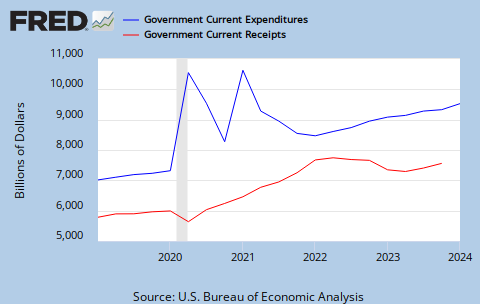
The Republicans would have you believe that if we "cut spending" and reduce tax revenue even further, the budget will be balanced. According to this graph, spending right now is about $5.3 trillion. Revenue is about $3.95 trillion. I wish someone would ask Republican candidates how they plan to cut over $1.3 trillion in spending. The Republican so-called "Pledge to America" pledges to cut spending back to 2008 levels, which still puts us at about $4.7 trillion. This pledge also comes with promises of FURTHER tax cuts, reducing revenue even more. Not even the most radical Republican plans, such as eliminating the Department of Education, will make a dent in that gap. Only dramatic cutbacks in military spending (which we never hear about, not even in the context of trying to find the billions that went missing in Iraq) AND the elimination of Social Security and Medicare (which ARE part of the Republican agenda) will.
Let's see how well candidates do who vocalize the Michele Bachmann line of setting age 60 as an arbitrary line in the sand and everyone else is shit out of luck. People like me who are 55 and have paid in for 38 years so that Republican presidents could steal the money and give it to their wealthy friends and patrons are really screwed. But even my younger co-workers aren't advocating for this.
I'm not surprised that teabag voters aren't asking their candidates where these "cuts" will come from. They really don't want to know.
Labels: spending, taxes, Teabag America
UPDATE: Here you go:
Labels: Republican lies, supply-side economics, taxes

Labels: economic death watch, greed, income inequality, taxes
The eight years of George W. Bush saw a massive redistribution of wealth into the pockets of corporations and the wealthy -- and yet when Bush left office in January 2009, having architected a financial near-collapse and the worst recession since the 1930's, the unemployment rate was already 7.6% and growing.
Now, along comes Marco Rubio, angling for a government paycheck in the U.S. Senate, saying that the problem is that we haven't cut their taxes enough:
Today, Senate candidate Marco Rubio (R-FL) released his economic platform, which he claims is a “a clear alternative to the anti-growth, anti-job creation economic policies coming out of Washington.” “We have reached a point in our history when we must decide if we are to continue on the free market, limited government path that has made us exceptional, or if we are prepared to follow the rest of the world down the road of government dependency,” he said.However, as the Orlando Sentinel’s Jim Stratton pointed out, “after perusing the list, the sharp-eyed reader will likely notice a recurring theme: This Rubio guy appears to be a big supporter of tax cuts. The proposals are sure to please his conservative base, many of whom see tax cuts as a magical elixir, good for pretty much anything that ails you.” Indeed, of the 12 steps that Rubio proposed, six are tax cuts, and another three are directives to stop regulations or taxes from being implemented. Here are some highlights:
– IDEA #1: Permanently Extend The 2001 And 2003 Tax Cuts
– IDEA #2: Cut Taxes On American Businesses
– IDEA #3: Permanently End The Death Tax
If this plan looks like a simple doubling-down on the Bush tax cuts, it is, with an unspecified corporate tax cut thrown on top for good measure. This comes despite the fact that the Bush tax cuts led to “the weakest jobs and income growth in the post-war period,” with monthly job growth the worst of any business cycle since 1945. In fact, the supply side tax cuts of both 1981 and 2001 failed to deliver as much investment growth, GDP growth, household income growth, wage growth or employment growth as the Clinton-era economic policies.
Rubio, and those like him, want us to think that the tax structure is so burdensome on corporations and the wealthy that they simply do not have enough left over after paying expenses to create jobs unless we cut their already-cut-to-the-bone taxes even more. But the more accurate impression is that what they are doing is holding the entire economy hostage until they get everything they want -- with NO guarantees that the jobs that they create (if they even create any) won't be created offshore.
Labels: corporatism, economic death watch, greed, taxes
Transocean, Ltd, the company that operates the Deepwater Horizon oil rig which recently exploded in the Gulf, is the “world’s biggest offshore drilling contractor.” The AP reports today that Transocean, after moving its headquarters from the U.S. to Zug, Switzerland, two years ago, paid a paltry 16 percent on its corporate income last year, less than half of the current American corporate income tax rate of 35 percent:In the foothills of the Swiss Alps four new steel-gray towers rise from what used to be a grassy field. One of them is home to Transocean Ltd., the world’s biggest offshore drilling contractor and owner of the Deepwater Horizon rig that exploded in the Gulf of Mexico, leading to one of the worst oil spills in history.
Low taxes prompted the decision two years ago to move to landlocked Switzerland: The company paid 16 percent tax on its $4.4 billion global operating income last year. The regular corporate income tax in the United States stands at about 35 percent.
The company, once based in Delaware, shifted its head office from the Cayman Islands, where it has been since 1999, to the central Swiss canton (state) of Zug. It joined other international corporations flocking there in search of tax advantages.
I wonder how the teabaggers enjoy being held hostage by scumbags like this.
(via)
Labels: 2010 Deepwater Horizon oil spill, corporatism, greed, taxes, Teabaggers
Amid complaints about high taxes and calls for a smaller government, Americans paid their lowest level of taxes last year since Harry Truman's presidency, a USA TODAY analysis of federal data found.
Some conservative political movements such as the "Tea Party" have criticized federal spending as being out of control. While spending is up, taxes have fallen to exceptionally low levels.
Federal, state and local taxes — including income, property, sales and other taxes — consumed 9.2% of all personal income in 2009, the lowest rate since 1950, the Bureau of Economic Analysis reports. That rate is far below the historic average of 12% for the last half-century. The overall tax burden hit bottom in December at 8.8.% of income before rising slightly in the first three months of 2010.
Labels: American Idiots, taxes, Teabaggers
Or something.
But the reality is far different, as Joe Conason points out.
Before angry voters restore Republicans to power -- in the name of "tea party populism" -- perhaps they should consider just how well right-wing rule worked out for them during the past decade. Last fall a Census Bureau study found that real median household income had declined from $52,500 in 2000, the last year that Bill Clinton was president, to $50,303 in 2008, George W. Bush's final year -- a period during which Republicans dominated Congress as well. Millions of those median households lost their health insurance (and, since the onset of the Great Recession, many of those same families have lost jobs as well).
So most of those middle-class Americans who flock to the tea party demonstrations were big losers during the Bush era. So who were the winners? According to David Cay Johnston, America's premier tax journalist, newly released IRS data shows that the country's very wealthiest citizens -- the top 400 -- marked enormous income gains while paying less and less in taxes. For purposes of comparison, Johnston notes that the bottom 90 percent of Americans saw their incomes rise by only 13 percent in 2009 dollars, compared with a 399 percent increase for the top 400.
In a single year, between 2006 and 2007, the income of those top 400 taxpayers rose by 31 percent -- from an average of $263.3 million to an average of $344.8 million per year. Meanwhile, Johnston writes, "Their effective income tax rate fell to 16.62 percent, down more than half a percentage point from 17.17 percent in 2006, the new data show. That rate is lower than the typical effective income tax rate paid by Americans with incomes in the low six figures, which is what each taxpayer in the top group earned in the first three hours of 2007." He also notes that the IRS data probably understates the income of the top 400, because of deferral rules enjoyed by hedge fund managers (at least three of whom earned $3 billion or more in 2007).
The Bush Administration spent the last decade funnelling more and more money into the pockets of the wealthiest Americans from the pockets of those who work for a living; who actually Do Something. Conservative tax policy offers favored tax treatment for inherited money and what is essentially gambling winnings from stock market gains, while pay-for-work is for schmucks. One in every six workers is unemployed. So when do these rich people start creating jobs already? And why do working stiffs continue to believe this nonsense?
They'll never mention public education or food safety or any of the other things government does. Perhaps that's because under Republicans, government does these things so badly. I recall growing up in the 1960's under two Democratic presidents, and the hamburgers at your backyard barbecue could be relied upon not to kill you, enough schools had been built to accommodate the huge generation that entered them, and my mother was a neighborhood oddity because she worked outside the home at a time when comfortable suburban life could be had on one income. No one really talked much about taxes then.
Funny how after nearly three decades since of Republican dominance (or a brief interregnum of a Democratic president who often acted like the kind of Republicans we used to call "Rockefeller Republicans"), Americans no longer feel they get any bang for their buck.
It's like the town in which I live, which is a microcosm of the natonal Republican Party. It's been a one-party town for the same nearly three decades, mirroring the nation as a whole. We have no trash collection (we pay for private haulers that contract with the town). In a town characterized by old-growth oak trees, leaves are collected only twice, so that at times in the fall the streets are nearly impassable. Snow removal is a joke. The DPW employees sit around smoking cigarettes while private landscapers who are friends with council members are hired to maintain the town's fields and parks. One of these landscapers recently "mistakenly" sprayed Roundup over one of the sports fields. Funny how the Council had been wanting to spend $1.5 million on artificial turf before this conveniently happened. We had a big nor'easter a couple of years ago, and piles of carpeting appeared in front of people's houses, often sitting for weeks until the next monthly household debris pickup. We shlepped bags of ruined carpet and floor tile to the DPW yard three times a week instead, where the workers stood around smoking cigarettes and occasionally flipping the switch in the truck. This is what Republican rule looks like. They say government doesn't work because they are unable or unwilling to make it work.
And so here we find ourselves, drowning in a debt that the Bush Administration left us, in a recession which, while it may be bottoming out, is not going to see a significant rise in incomes or job opportunities for a long time to come, if ever. And the "T"-word is being mentioned:
During last year's campaign, President Obama vowed to enact a bold agenda without raising taxes for the middle class, a pledge budget experts viewed with skepticism. Since then, a severe recession, massive deficits and a national debt that is swelling toward a 50-year high have only made his promise harder to keep.
The Obama administration has insisted that the pledge will stand. But the president's top economic advisers have refused to rule out broad-based tax increases to close the yawning gap between federal revenue and government spending and are warning of tough choices ahead.
Republicans are already on the attack, accusing Obama of plotting to break his no-tax vow, the same political transgression that cost Democrats control of Congress under former president Bill Clinton and may have cost president George H.W. Bush his job. Democrats say Obama is highly unlikely to break the pledge before next year's congressional election and observe that it would be safer to wait until his second term if a tax increase becomes unavoidable.
"If you rule out inflating our way out of the problem and defaulting on the debt, there are two ways: Cut spending or raise taxes," said William G. Gale, an expert on fiscal policy at the Brookings Institution. With more than 80 percent of federal spending devoted to politically untouchable programs such as Social Security, Medicare and Medicaid, he said, "it's going to be really hard to make significant headway on the spending side. So that means you've got to think about taxes."
Spending cuts were a big part of the solution the last time the nation faced such a towering debt. In the aftermath of World War II, with the debt exceeding the country's entire economic output, the government slashed military expenditures. Within two years, Washington was spending less than it took in. Fifteen percent inflation also helped by reducing the real value of the debt. When the country went to war again in Korea and then Vietnam, tax increases helped keep the budget largely in balance and the debt continued to fall.
Today's problem is more complex. Obama not only faces the fallout from the worst economic downturn in 30 years, but also inherited the debt piled up by his predecessor, Republican George W. Bush. Bush invaded Iraq and approved an expensive new prescription drug benefit for the elderly while pushing through one of the biggest tax cuts of the post-war era -- worth an estimated $1.6 trillion in foregone revenue by the time the provisions expire next year. This was the first time the United States had not adjusted its fiscal policy to meet its wartime needs, according to "The Price of Liberty," a book on war financing by Goldman Sachs vice chairman Robert D. Hormats.
After running surpluses in the late 1990s, the government began spending far more than it took in, forcing the Treasury to increase borrowing from China and other creditors. During the Bush administration, the portion of the debt held by the public jumped from just over $3 trillion to nearly $6 trillion. Federal rescue efforts in the face of last fall's financial meltdown have rapidly driven the debt higher. Today it stands at nearly $7.4 trillion, or about 52 percent of the overall U.S. economy.
"There's no question in my view that Bush was the most fiscally irresponsible president in the history of the republic," said David M. Walker, the comptroller general under Bush who now advocates for deficit reduction. Obama "was handed a bad deck," he said. "But the question is, are you making it better or not? And so far the answer is no."
Supply-side economics was sold to the American people as a kind of free lunch: You could cut taxes, increase military spending, and balance the budget. Forgotten is that the balance the budget thing never quite worked out the way Reagan said it would. But tax increases have been anathema ever since.
Ask Americans what they want to see cut, and they'll say "welfare." Ask them what they mean by welfare. Ask which of the following programs that comprise eleven percent of the Federal budget they want to eliminate:
- the refundable portion of the earned-income and child tax credits, which assist low- and moderate-income working families through the tax code;
- programs that provide cash payments to eligible individuals or households, including Supplemental Security Income for the elderly or disabled poor and unemployment insurance;
- various forms of in-kind assistance for low-income families and individuals, including food stamps, school meals, low-income housing assistance, child-care assistance, and assistance in meeting home energy bills; and various other programs such as those that aid abused and neglected children.
You already know what the answer is: It's #3. Because after the zygotes and fetii become actual children, no one gives a shit about them. But what percentage of the budget does that actually comprise? If the earned income and child tax credits and SSI are part of it, we're looking at perhaps 5-6%? That's not going to make much of a difference.
How about Social Security? That's 21% of the budget right there. Young people would love to see it eliminated. They feel they're going to get screwed. Well, guess what: So do we boomers, and we always have, ever since the FICA withholding increased in 1986 and it was used to finance debt spending. Medicare's another 20%. That's over 40% right there? Let's just elminiate these. Tomorrow. Right?
Ask these young people if they're willing to support their parents in their old age -- you know, the ones who did everything right in putting money into 401(k) plans (because we were only a few years into the workplace when pensions were largely replaced by 401(k) plans) and lost 20-40% of it when the bubble burst in the waning years of the Bush Administration. Or perhaps they want to put those parents out on the street. That'd sure take care of the need for Medicare too, then, right -- if Grandma is living on a subway grate?
How about defense? That's 21%. After all, what's the point of defending a country with no jobs and old people and the poor (which will comprise a sizable portion of the population that that point) living on the street, starving and dying of exposure? Oh yes, I forgot -- it's because the Bush family and their friends will still have plenty of money, as will the Chairmen of AIG, UnitedHealth, Citicorp, and other giant corporations that make their money out of sucking cash from the rest of us and giving nothing in return.
(Source of figures: Center on Budget and Policy Priorities)
It's all worked perfectly for them, hasn't it, these three decades of Republican dominance? They've wanted to dismantle programs that help anyone other than corporations, and now their latest hero, George W. Bush, put us in eight short years into a position in which the New Deal and the Great Society will have to be dismantled, because there's no money to pay for them. The middle-class is going to scream bloody murder at paying more taxes, partially because they are struggling themselves, but also because they were told by Ronald Reagan and others that if they just worked hard enough, they too could enter the Kingdom of Rich Men, when said Kings knew full well that they had no intention of letting even the hardest-working schmoe into their little club. These men begrudge even the existence of a middle class, and so they set out to dismantle it -- and have largely succeeded.
Perhaps this is why George W. Bush decided maybe he wouldn't rather be a dictator after all -- because he didn't want to hang around to clean up the mess he made. Instead, he allowed the black guy to come in and do it. And while I have significant issues with the Obama presidency so far, I will at least give him credit for trying. But it will all be for naught, because by doing what may have to be done, he will open the door for a flame-fanner like Sarah Palin to succeed him.
And then God help us all.
Labels: economic death watch, rant, taxes
I was never a big fan of Tom Daschle. Time after time during the Bush Administration, when he was Senate Majority Leader, he caved in to Bush Junta demands. When Barack Obama named him as his nominee to be HHS Secretary, I was less than thrilled. But this business with his taxes isn't about him being a wuss, it's about him being just as corrupt and greedy as the Republicans we're trying to replace. And the bottom line is that at least in the media, the IOKIYAR Rule is alive and well. But even without the media, aren't we supposed to be better than that? Especially when there is a perfectly fine candidate out there for the job who has probably paid his taxes every year?
So I'm with the Gray Lady on this one:
Mr. Daschle’s tax shortfall is particularly troubling because it comes on the heels of another nominee’s failure to pay taxes due. We were not pleased when the president’s Treasury secretary, Timothy Geithner, admitted that he had failed to pay tens of thousands of dollars in federal self-employment taxes while working for the International Monetary Fund despite having signed paperwork acknowledging the obligation.
Now we are confronted with an even larger lapse by Mr. Daschle, who failed to pay $128,000 in taxes, primarily for personal use of a car and driver provided to him by a private equity firm for which he consulted. Although the firm — headed by a major Democratic donor — had not issued a form 1099 for the value of the car service, Mr. Daschle said he became concerned last June that he might owe taxes on it and instructed his accountant to investigate. Neither was concerned enough to actually pay the taxes.
Only after the Obama transition team flagged unrelated tax issues that would require filing amended returns did Mr. Daschle and his accountant address the need to report the personal use value of the car service — more than $255,000 over three years — as income. Only after he had been chosen to be the health secretary did Mr. Daschle tell the transition team about the unpaid taxes. He paid some $140,000 in back taxes and interest on Jan. 2 to settle several tax problems — and he acknowledges owing more.
In both the Geithner and Daschle cases, the failure to pay taxes is attributed to unintentional oversights. But Mr. Daschle is one oversight case too many. The American tax system depends heavily on voluntary compliance. It would send a terrible message to the public if we ignore the failure of yet another high-level nominee to comply with the tax laws.
Labels: idiocy, taxes, Tom Daschle
The checks will be in the mail — eventually.
But President Bush’s plan to send payments to 117 million households to stimulate the economy would impose major strains on the Internal Revenue Service, delays in answering calls to the agency and require a host of technical rules to determine who ultimately collects the benefits, officials said Thursday.
The deal between the administration and House leaders calls for checks to be issued 60 days after the president signs a law authorizing the one-time payments. That may be in as few as four or five weeks if the full House and the Senate come to terms on the details quickly.
In theory, the first checks may arrive in early May, if nothing goes wrong.
Even as the negotiators crunched the numbers, the Congressional Joint Committee on Taxation warned that the tax-filing season could be disrupted and hinted that it might be June before checks were issued.
I.R.S. computer and other systems “are today fully engaged in processing 2007 tax returns,” the committee said Monday in a report. “As a result, it is not practical to contemplate distributing cash rebates until the peak filing season is completed, which in past years has been the very end of May.”
At the very least, the agency needs to have in hand the annual returns for last year to know who is married and who has dependent children, information that often changes.
The size of the checks will also depend on incomes and other factors. For example, individuals would not qualify for the $300 payments if they earned less than $3,000, unless they paid taxes on unearned income like pensions and interest.
Although many people who owe no income tax will receive checks, none will be sent to people who pay their taxes through withholding but do not file returns, said Anthony DeSouza, a spokesman for the Treasury Department. Because the withholding tables typically collect slightly more tax than is owed, those nonfilers are seldom pursued.
The prospect of collecting the stimulus payments may spur some of those taxpayers to file returns, after all, adding to the logistical strain and increasing the drain on the Treasury, which would have otherwise kept their money.
Determining who is eligible and for how much money will require major reprogramming of an outdated computer system that relies on technology long since abandoned by business. The software changes will have to be made as an estimated 135 million individual income tax returns arrive between now and April 15.
The Democratic candidates for the presidency ought to be all over this, not because of the delay in getting these ridiculous vote-bribes out to the public, but because it's yet another symptom of what happens when Republicans decide to reduce government so much that you can "drown it in a bathtub." For twenty-eight years, Democrats have allowed Republicans to brand them as "the party of tax and spend", when they should have been fighting back against the party of "borrow and shovel the borrowed cash into the pockets of our friends." Because the borrowed money sure as hell isn't going to fund government agencies. In fact, even though the IRS was deemed to be underfunded earlier in 2007, the House cut funding even further in December:
The omnibus appropriations bill passed by the House last night contains 3,500 pages and over $516 billion in spending. Yet with all that space (and money), Congress could not find enough room for even their own priorities from earlier this year for the Internal Revenue Service (IRS). Specifics of the IRS's funding take from the omnibus show the House has included $2.15 billion for taxpayer services, down slightly from the $2.155 proposed earlier this year, $4.78 billion for enforcement (down from $4.93 billion) and $3.68 billion for operations (down from $3.77 billion). What's more, the House has backed away from a requirement for the IRS to develop a strategic plan to address the tax gap. The total IRS budget request ($10.89 billion) is $203 million below even President Bush's request!. What is going on here?
So, just to review, despite a year in which congressional hearings revealed that the IRS is underfunded, runs a dangerous and wasteful privatization program, and has no strategic plan for addressing the tax gap, Congress decided to give it less money, allow the privatization program to continue, and let the IRS off the hook for developing a strategic plan.
I guess they had forgotten about this when they decided to toss a few coins at the peasants.
Labels: Bush Administration, incompetence, IRS, taxes
I'm not sure what we would do if Charles Schultz hadn't created the indelible image of Lucy pulling the football away from Charlie Brown again and again and again, because it's so evocative of life in these here United States during the Bush years.
Remember back in 2001, when you got a check for $300 and they called it a "tax rebate"? And remember how it turned out to be not a rebate at all, but an advance against your tax refund (assuming you got one) resulting from the decrease in the bottom rate from 15% to 10%? I seem to recall a lot of letters to the editor back then from people screaming bloody murder when they found themselves getting back less than they expected because they'd already spent that $300. Never mind that if you're getting a tax refund at all it's because you just gave the government an interest-free loan for a year (far better to have to PAY a modest amount and RECEIVE an interest-free loan FROM the government for a year)...the fact is that you got scammed.
And they're about to do it again:
Experts believe Bush’s proposal hints at a tax-rebate program, much like the one that was conducted in 2001 when Bush was first elected. Where would the rebate come from?
No one knows for sure, but an analysis by the Tax Foundation speculates that the current 10 percent tax bracket would be dropped to 0 percent for one year – meeting Bush’s goal of creating a temporary but swift break.
Currently, single filers pay 10 percent tax on about $8,000 in taxable income, while married couples pay 10 percent on the first $16,000 they earn. By dropping this bracket to zero, singles would pay $800 less and married couples would pay $1,600 less on their 2008 returns.
But because Bush wants to stimulate the economy quickly, the tax cut would be advanced to taxpayers through checks sent by the Internal Revenue Service.
Does this mean that the 10% rate will be dropped for the 2007 tax year or the 2008 tax year? If it's being dropped retroactively for 2007, then it means that you'll be getting your refund before you even do your taxes...assuming you're due a refund. If you're eligible (and the numbers I'm seeing is that this so-called rebate is only going to be sent for single taxpayers earning less than $85,000/year and couples earning less than $110,000) then it really is a rebate against taxes you already paid in. But I suspect (and I'm trying to find confirmation) that this is not a retroactive tax cut, but instead a cut for 2008, with the checks being an advance on potential overpayments for 2008 that would be refunded otherwise in 2009 -- thereby leaving the taxpayer surprise for after the Bush Administration leaves office.
From what I'm reading, it sounds like the cut being proposed is for 2008 taxes -- which means that you may be surprised next year, long after the check is spent and promptly forgotten.
Labels: economic death watch, taxes
Corrente
Hullabaloo
Hoffmania
Orcinus
Scoobie Davis
Talking Points Memo
World O'Crap
Fact-esque
Liberal Oasis
Oliver Willis
Talk Left
This Modern World
Philip Barron
Rising Hegemon
AMERICABlog
James Wolcott
Skippy the Bush Kangaroo
Dependable Renegade
The Political Carnival
Astrological Musings
Firedoglake
Spiiderweb
Words of Power
RIPCoco
Kung Fu Monkey
Empire Burlesque
WTF is it Now
Down With Tyranny
Welcome Back to Pottersvillle
Spocko's Brain
The Sideshow
The Ostroy Report
Fallenmonk
Three Wise Men
NewsHoggers
Blue Gal
Blah3
Shadow of the Hegemon
Slacktivist
ShortWoman
Echidne of the Snakes
Jesus' General
My Left Wing
Arthur Silber
Republic of T
Bitch Ph.D
The American Street
Comments from Left Field
Balloon Juice
I Can't Believe It's Not a Democracy
Scholars and Rogues
On My Mind
PhysioProf
The Vulgar Curmudgeon
Monkeyfister
Sasha Undercover
ThePoliticalCat
Fables of the Reconstruction
Talk2Action
D-Day
State of the Day
Just an Earth-Bound Misfit
Bradblog
They Gave Us a Republic
Vagabond Scholar
Seeing the Forest
The Reaction
Orcinus
SteveAudio
Princess Sparkle Pony
Paul Levinson
Politics After 50
The Jed Report
One Utah
Sam Seder
Alternet
The Political Carnival
County Fair
Mudflats
A Feather Adrift
That's Why
Disciples of Joe
No Longer Quivering
Margaret and Helen
Stand With Dr. Dean
All the Good Names Were Taken
Badtux the Snarky Penguin
My Mental Dumping Ground
Legal Schnauzer
Alicublog
Bouphonia
Konagod
The Reverse Spin
City of Angels
The Gospel According to Hate
Menopausal Stoners
Stinque
The New York Crank
BP Oil Slick
Pen-Elayne
Inside-Out the Beltway
Reclusive Leftist
Southern Beale
The Moderate Voice
The Rant
Help the 99ers
Brendan Calling
Matt Taibbi
I Was Told There Would Be Bacon
We Don't Agree, But...
ShortWoman
of mule dung and ash
Cookies in Heaven
The Hunting of the Snark
The Policy Page (Rick Ungar)
Ramona's Voices
Sardonicky
Dagblog
The Titanic Sails At Dawn
Cheese Food Nation
Donkey Mountain
Thump and Whip
Under the Lobsterscope
Addicting Info
Wifely Person
Disaffected and it Feels So Good
Reality Chex
Burnt Orange Report
Salmon Alley
The Politics Blog w/Charles Pierce
Elizabitchez
We Are The 99 Percent.
Republic of Gilead
amigoingsomeplace
Fukushima Diary
The Polygon
Degringolade
Onyx Lynx
Parsley's Pics
Mainmati
Brandflakes for Breakfast
The Economic Populist
Liberal Dan
Ex-Amish Atheist
The Poor Man's Huffington Post
Constant Commoner
Channel Surfing
Big Bad Bald Bastard
Panic in Funland (Tbogg!!!)
Weird Wally's Worldview
The Galloping Beaver (Canada)
Cathie from Canada
How This Old Brit Sees It ...
Stunner's Afflictions (Jamaica)
Jamaican Lifestyle
behind them
Daily Kos
Atrios
Open Left


Dispatches from the Island &
Further Dispatches
(Jorge Garcia)
Baseball Nerd
(Keith Olbermann)
FOK News Channel (ditto)
Marc Maron
Sam Seder
Brendan McDonald
Johnny Weir
Melina
Lynn
Keith Olbermann

Break Room Live archives
Morning Sedition 3/04-12/05
A Brilliant Radio Show -
Morning Seditionists
Camp Butch (all the
Sedition you can eat)
Jim Earl and his
Big Page of Crap
Morning Remembrance
Steve Gilliard 1966-2007:
A Brilliant Blogger
The News Blog archive
NetSlaves article archive
Friends of Steve:
The Group News Blog
"Jon Swift" (Al Weisel) 1963-2010
Bats Left Throws Right (Doghouse Riley)
Altercation
The All-Spin Zone
Baghdad Burning
Carrie's Nation
Little Country Lost
Cynical Nation
Pam's House Blend
photos1.blogger.com/blogger/397/497/320/bb_banner.1.jpg]^23004A00]coral]navy],](](]]]black],]3]8]20]1]2]3]3]1]2]3]1]1],](](]^235E3D00])])]^3Cimg^20src^3D^22)photos1.blogger.com/blogger/397/497/320/bb_banner.1.jpg^22]^22...you^20have^20a^20choice^3A^20be^20a^20fighting^20liberal^20or^20sit^20quietly.^20I^20know^20what^20I^20am^2C^20what^20are^20you^3F^22^20--^20^3Ca^20href^3D^22)stevegilliard.blogspot.com/2003/12/im-fighting-liberal-you-know-ive.html^22^20STYLE^3D^22color^3Awhite^3B^22^3ESteve^20Gilliard^2C^201966^20-^202007^3C/a^3E^3CBR^3E^22For^20straight^20up^20monster-stomping^20goodness^2C^20nothing^20makes^20smoke^20shoot^20out^20my^20ears^20like^20Brilliant@Breakfast^22^20--^20^3Ca^20href^3D^22)www.poorimpulsecontrol.net/blog^22^20STYLE^3D^22color^3Awhite^3B^22^3ETata^3C/a^3E],](],](](]black](](](]^23FDF2D7](](](]^23333](](](],]50]20],](](]^23FFF8DD])])]black]1.5]15],](](]^2398A45C])])]black]^23FFF8DD])])]^23666]30]^235E3E1A]^23622121],](](]^235E3E1A](],](]^235E3E1A]^23039]^2306C],](](]^23FFF8DD])])],](](]^23FFF8DD])])],](](]^23FFF8DD])])],](]^235E3E1A]^23666]15]3]25]20]^23808C43],](](],](],](](],](]black](](](],](](](],]^235C3E11](](](],](](]^23211104](](](](](],]^2336F]^23211104](],](]Posted^20by^20^24AUTH^20^7C^20^24TIME]20],](](]^23FFF8DD])])]^23FFF8DD])])]^23666]30]^235E3E1A]^23622121],](](]^235E3E1A](],](]^23333]^23039]^2306C]Contact]]]Home]^24HOME]First^20Page]Email^3A^3CBR^3Ebrilliantatbreakfast^20at^20gmail^20dot^20com]]]RSS]^24RSS]RSS^20Feed]Your^20Servers]]]Jill]rilliantatbreakfast.blogspot.com]]Melina])www.ripcoco.com]RIPCoco]Carrie])carriesnation.blogspot.com]Carrie^27s^20Nation]And^20occasionally...]]]jurassicpork])welcome-to-pottersville.blogspot.com]Welcome^20to^20Pottersville]Bob])bobrixon.blogspot.com]The^20Rix^20Mix]Tata])www.poorimpulsecontrol.net/blog]Poor^20Impulse^20Control]Spiiderweb])spiiderweb.blogspot.com]Spiiderweb]Other^20Brilliant^20Bloggers]]]Modern^20Fabulousity])modernfabulousity.blogspot.com]Modern^20Fabulousity]Pandagon])www.pandagon.net]Pandagon]Altercation])www.mediamatters.org/altercation]Altercation]Corrente])www.correntewire.com/]Corrente]Hullabaloo])digbysblog.blogspot.com]Hullabaloo]Hoffmania])www.hoffmania.com]Hoffmania]Orcinus])dneiwert.blogspot.com]Orcinus]Scoobie^20Davis])scoobiedavis.blogspot.com]Scoobie^20Davis]Talking^20Points^20Memo])talkingpointsmemo.com]Talking^20Points^20Memo]World^20O^27Crap])world-o-crap.com/blog]World^20O^27Crap]Fact-esque])casadelogo.typepad.com/factesque/]Fact-esque]Liberal^20Oasis])www.liberaloasis.com/]Liberal^20Oasis]Oliver^20Willis])www.oliverwillis.com/]Oliver^20Willis]Talk^20Left])www.talkleft.com/]Talk^20Left]The^20Talent^20Show])www.thetalentshow.org/]The^20Talent^20Show]Waveflux])www.waveflux.net]Waveflux]Rising^20Hegemon])rising-hegemon.blogspot.com/]Rising^20Hegemon]The^20Poor^20Man])www.thepoorman.net/]The^20Poor^20Man]AMERICABlog])www.americablog.org/]AMERICABlog]Needlenose])www.needlenose.com/]Needlenose]Brilliant^20NJ^20bloggers]]]^24ARCHIVE]^20]]Friends]]]Horm])blog.horm.org]Hallucinations^20Of^20Reabsorbed^20Mind]Phorm])p.horm.org]Another^20Phormation]Etc]]]^3Cimg^20src^3D^22)psyc.horm.org/barimg/bar_psycho.png^22^20width^3D^2280^22^20height^3D^2215^22^20alt^3D^22PsycHo^3A^20Free^20Template^20Generator^22^20style^3D^22border^3A^200px^20solid^20black^22^20/^3E]^24PSYCHO]PsycHo^3A^20Free^20Template^20Generator]^3Cimg^20src^3D^22)psyc.horm.org/barimg/bar_firefox.png^22^20width^3D^2280^22^20height^3D^2215^22^20alt^3D^22Get^20FireFox^21^22^20style^3D^22border^3A^200px^20solid^20black^22^20/^3E])www.mozilla.org/products/firefox/]Get^20Firefox^21]^3Cimg^20src^3D^22)psyc.horm.org/barimg/bar_xhtml.png^22^20width^3D^2280^22^20height^3D^2215^22^20alt^3D^22XHTML^20Validator^22^20style^3D^22border^3A^200px^20solid^20black^22^20/^3E])validator.w3.org/check/referer]XHTML^20Validator]]]]Home]^24HOME]First^20Page]Email]^24EMAIL]Mail^20me^21]RSS]^24RSS]RSS^20Feed]Archive]]]^24ARCHIVE]^20]]Friends]]]Horm])blog.horm.org]Hallucinations^20Of^20Reabsorbed^20Mind]Phorm])p.horm.org]Another^20Phormation]Etc]]]^3Cimg^20src^3D^22)psyc.horm.org/barimg/bar_psycho.png^22^20width^3D^2280^22^20height^3D^2215^22^20alt^3D^22PsycHo^3A^20Free^20Template^20Generator^22^20style^3D^22border^3A^200px^20solid^20black^22^20/^3E]^24PSYCHO]PsycHo^3A^20Free^20Template^20Generator]^3Cimg^20src^3D^22)psyc.horm.org/barimg/bar_firefox.png^22^20width^3D^2280^22^20height^3D^2215^22^20alt^3D^22Get^20FireFox^21^22^20style^3D^22border^3A^200px^20solid^20black^22^20/^3E])www.mozilla.org/products/firefox/]Get^20Firefox^21]^3Cimg^20src^3D^22)psyc.horm.org/barimg/bar_xhtml.png^22^20width^3D^2280^22^20height^3D^2215^22^20alt^3D^22XHTML^20Validator^22^20style^3D^22border^3A^200px^20solid^20black^22^20/^3E])validator.w3.org/check/referer]XHTML^20Validator^26^2361470^3BPsycHo})


