| "Only dull people are brilliant at breakfast" -Oscar Wilde |
 |
"The liberal soul shall be made fat, and he that watereth, shall be watered also himself." -- Proverbs 11:25 |
"For straight up monster-stomping goodness, nothing makes smoke shoot out my ears like Brilliant@Breakfast" -- Tata
"...the best bleacher bum since Pete Axthelm" -- Randy K.
"I came here to chew bubblegum and kick ass. And I'm all out of bubblegum." -- "Rowdy" Roddy Piper (1954-2015), They Live


Au revoir, y'all....
So Long and Thanks for All the Gefilte Fish
Like White on Rice
Why Did Hillary Clinton Hire a Monsanto Lobbyist t...
Virtual Book Sale
The Man Who Poisoned America
We are privileged to be alive today
The Prodigal Blogger Stops By
Good Times at Pottersville, 3/14/15
Please consider supporting B@B with a donation: There is no gift like the present.
But gifts are nice too:





After the U.S.-led invasion of Iraq in March 2003, the George W. Bush administration flooded the conquered country with so much cash to pay for reconstruction and other projects in the first year that a new unit of measurement was born.
Pentagon officials determined that one giant C-130 Hercules cargo plane could carry $2.4 billion in shrink-wrapped bricks of $100 bills. They sent an initial full planeload of cash, followed by 20 other flights to Iraq by May 2004 in a $12-billion haul that U.S. officials believe to be the biggest international cash airlift of all time.
This month, the Pentagon and the Iraqi government are finally closing the books on the program that handled all those Benjamins. But despite years of audits and investigations, U.S. Defense officials still cannot say what happened to $6.6 billion in cash — enough to run the Los Angeles Unified School District or the Chicago Public Schools for a year, among many other things.
For the first time, federal auditors are suggesting that some or all of the cash may have been stolen, not just mislaid in an accounting error. Stuart Bowen, special inspector general for Iraq reconstruction, an office created by Congress, said the missing $6.6 billion may be "the largest theft of funds in national history."
The outright theft of billions, billions more given in no-bid contracts to Halliburton and KBR, the wholesale squandering of the entire Clinton-era surplus to pay for George W. Bush's wars -- wars without end that Barack Obama feels somehow obliged to continue.
When I draw the verbal picture of billionaires pointing our attention at the poor while they're lifting the last few bucks out of our wallets while we're distracted, this is exactly what I'm talking about.
Labels: Bush Administration crimes, corruption, Iraq, just another outrage

A $40 million prison sits in the desert north of Baghdad, empty. A $165 million children's hospital goes unused in the south. A $100 million waste water treatment system in Fallujah has cost three times more than projected, yet sewage still runs through the streets.
As the U.S. draws down in Iraq, it is leaving behind hundreds of abandoned or incomplete projects. More than $5 billion in American taxpayer funds has been wasted — more than 10 percent of the some $50 billion the U.S. has spent on reconstruction in Iraq, according to audits from a U.S. watchdog agency.
That amount is likely an underestimate, based on an analysis of more than 300 reports by auditors with the special inspector general for Iraq reconstruction. And it does not take into account security costs, which have run almost 17 percent for some projects.
And this doesn't even include the $9 billion that mysteriously disappeared in that country during the war.
Labels: government waste, hypocrisy, Iraq, Teabaggers
David Sirota:
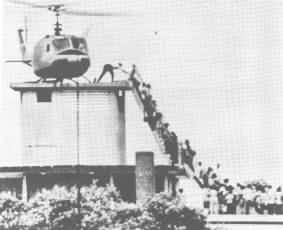
As the Associated Press reports, there was lots of happy talk about the end of combat in Iraq this week throughout the national media, as various media outlets stumbled all over themselves in a desperate (and rather blatant) attempt to pitch the news as a reprise of the famous Vietnam withdrawal imagery. The problem, of course, is that there are still tens of thousands of U.S. troops in Iraq -- and, according to the New York Times, the Obama administration is "planning to more than double its private security guards" there (Blackwater anyone?).
That's the story cable news doesn't want you knowing, because it gets in the way of reporters efforts to pretend to be documenting some sort of iconic military history -- when, at least at this moment, it looks like they may be promoting a new version of George W. Bush's infamously misleading Mission Accomplished/"end of major combat operations" declaration back in 2003 -- a typical form of spin that simultaneously reassures a war-weary public and obscures a permanent-war reality.
Now, sure, there is a story in the U.S. government changing it's own official story about Iraq. That's definitely newsworthy and even, perhaps, encouraging because it may ultimately mean the fulfillment of President Obama's campaign pledge to actually, really end the war (and I hope and pray this is, in fact, the case). That is, it may preview a true phased withdrawal and a future of genuine change, rather than just a never-ending game of semantics about the difference between "combat" troops and "military advisers" (a game of semantics, by the way, that notoriously marked the Vietnam occupation and its use of military "advisers").
But for any media outlet to pretend that a change in official policy and rhetoric is akin to the end of the war is arguably as misleading as the "March to War" coverage that led us into this conflict in the first place. And I say that because of what the military itself is telling us not in the glamorous high-spotlight national media, but right here at home where troops and their families live.
Notice today's dispatch from the Colorado Springs Gazette, which has been all but ignored by the national media:In a matter of days, the seven-year-old Iraq war will officially have a new name: Operation New Dawn. At Fort Carson, however, the new day brings few changes.
In a news conference on post Thursday, representatives of the 4th Infantry Division discussed the future of Fort Carson's infantry soldiers, saying that current and scheduled deployments will resume as planned.
"Our mission has not changed," Maj. Joe Bethel of the 3rd Brigade Combat Team said.
Endless war. Endless unaccountable money being funnelled into these wars. Blank checks for Blackwater, cat food for America's elderly and failing schools for America's children and no jobs for Americas working-age citizens.
Does it really matter anymore who we elect, when one party loves endless war and the other one is so terrified of being labeled weak that they enthusiastically go along? Does it really matter who we elect when BOTH parties are just champing at the bit to make sure people work busing tables at Fuddruckers until they drop dead because they've been pushed out of their living wage jobs? Does it really matter anymore? Or do we just sit and watch it all fall apart?
Labels: Iraq, perpetual war, We Are So Screwed
Hearts and minds, baby!
Labels: Baseball, Iraq, Rachel Maddow, warm fuzzies
A former Blackwater employee and an ex-US Marine who has worked as a security operative for the company have made a series of explosive allegations in sworn statements filed on August 3 in federal court in Virginia. The two men claim that the company's owner, Erik Prince, may have murdered or facilitated the murder of individuals who were cooperating with federal authorities investigating the company. The former employee also alleges that Prince "views himself as a Christian crusader tasked with eliminating Muslims and the Islamic faith from the globe," and that Prince's companies "encouraged and rewarded the destruction of Iraqi life."
In their testimony, both men also allege that Blackwater was smuggling weapons into Iraq. One of the men alleges that Prince turned a profit by transporting "illegal" or "unlawful" weapons into the country on Prince's private planes. They also charge that Prince and other Blackwater executives destroyed incriminating videos, emails and other documents and have intentionally deceived the US State Department and other federal agencies. The identities of the two individuals were sealed out of concerns for their safety.
These allegations, and a series of other charges, are contained in sworn affidavits, given under penalty of perjury, filed late at night on August 3 in the Eastern District of Virginia as part of a seventy-page motion by lawyers for Iraqi civilians suing Blackwater for alleged war crimes and other misconduct.
Here's Jeremy Scahill, author of this article, on Countdown last night:
And yet it wasn't until May that another company took over the security contract in Iraq.
This shouldn't be a bombshell revelation to anyone who's been following the Blackwater story. Erik Prince has been known to be a nasty piece of work for quite a long time. The only question is just HOW nasty, and now no one has an excuse not to know.
But even if Erik Prince ends up getting frogmarches off to prison, which if these allegations are proven in court, he richly deserves, he isn't the only Soldier for Jeebus that is turning the United States Military into a 21st century replay of the Crusades. There's still that thorny little problem of Christianist chaplains with the very same vision:
Ever since former president George W. Bushreferred to the war on terror as a “crusade” in the days after the September 11 attacks, many have charged that the United States was conducting a holy war, pitting a Christian America against the Muslim world. That perception grew as prominent military leaders such as Lt. Gen. William Boykin described the wars in evangelical terms, casting the U.S. military as the "army of God." Although President Obama addressed the Muslim world this month in an attempt to undo the Bush administration's legacy of militant Christian rhetoric that often antagonized Muslim countries, several recent stories have framed the issue as a wider problem of an evangelical military culture that sees spreading Christianity as part of its mission.
A May article in Harper’s by Jeff Sharlet illustrated a military engaged in an internal battle over religious practice. Then came news about former Defense secretary Donald Rumsfeld’s Scripture-themed briefings to President Bush that paired war scenes with Bible verses. (In an e-mail published on Politico, Rumsfeld aide Keith Urbahn denied that the former Defense secretary had created or even seen many of the briefings.) Later in May, Al-Jazeera broadcast clips filmed in 2008 showing stacks of Bibles translated into Pashto and Dari at the U.S. air base in Bagram and featuring the chief of U.S. military chaplains in Afghanistan, Lt. Col. Gary Hensley, telling soldiers to “hunt people for Jesus.”
In the aftermath of that report, the Pentagon responded that it had confiscated and destroyed the Bibles and said there was no effort to convert Afghans. But while the military dismissed the Bagram Bibles as an isolated incident, a civil-rights watchdog group, Military Religious Freedom Foundation (MRFF), says this is not the case. According to the group's president, Mikey Weinstein, a cadre of 40 U.S. chaplains took part in a 2003 project to distribute 2.4 million Arabic-language Bibles in Iraq. This would be a serious violation of U.S. military Central Command's General Order Number One forbidding active-duty troops from trying to convert people to any religion. A Defense Department spokeswoman, in an e-mail to NEWSWEEK, denies any knowledge of this project.
The Bible initiative was handled by former Army chaplain Jim Ammerman, the 83-year-old founder of the Chaplaincy of Full Gospel Churches (CFGC), an organization in charge of endorsing 270 chaplains and chaplain candidates for the armed services. Ammerman worked with an evangelical group based in Arkansas, the International Missions Network Center, to distribute the Bibles through the efforts of his 40 active-duty chaplains in Iraq. A 2003 newsletter for the group said of the effort, "The goal is to establish a wedge for the kingdom of God in the Middle East, directly affecting the Islamic world."
Not one of these people has been removed. And there's more.
Blackwater may have been replaced in Iraq, but its vision lives on.
Labels: Blackwater, Christofascist Zombie Brigade, Iraq, right-wing hatemongers
Mark Benjamin:
Last month, Salon published a story reporting that U.S. Army Pfc. Albert Nelson and Pfc. Roger Suarez were killed by U.S. tank fire in Ramadi, Iraq, in late 2006, in an incident partially captured on video, but that an Army investigation instead blamed their deaths on enemy action. Now Salon has learned that documents relating to the two men were shredded hours after the story was published. Three soldiers at Fort Carson, Colo. — including two who were present in Ramadi during the friendly fire incident, one of them just feet from where Nelson and Suarez died — were ordered to shred two boxes full of documents about Nelson and Suarez. One of the soldiers preserved some of the documents as proof that the shredding occurred and provided them to Salon. All three soldiers, with the assistance of a U.S. senator's office, have since been relocated for their safety.
--------------
Oct. 14 was a long and eventful day at Fort Carson. The post had been in an uproar. The night before, Salon had published my article airing claims that two of the base's soldiers, Pfc. Albert Nelson and Pfc. Roger Suarez-Gonzalez, had been killed by friendly fire in Iraq on Dec. 4, 2006, but that the Army covered up the cause of death, attributing it to enemy action.
Based on the testimony of eyewitnesses, and on video and audio recorded by a helmet-mounted camera that captured much of the action that day, my report stated that Nelson and Suarez seemed to have been killed by an American tank shell. The shell apparently struck their position on the roof of a two-story ferro-concrete building in Ramadi, Anbar province, Iraq, killing Suarez instantly, mortally wounding Nelson, and injuring several other soldiers. I included both an edited and a full-length version of the video in the article. The video shows soldiers just after the blast claiming to have watched the tank fire on them. Then a sergeant attempts to report over a radio that a U.S. tank killed his men. He seems to be promptly overruled by a superior officer who is not at the scene. An official Army investigation then found that the simultaneous impact of two enemy mortars killed the men.
The article about the alleged friendly fire incident was long overdue for some of the men who fought in Ramadi that day for the Army's Fort Carson-based D Company, 1st Battalion, 9th Infantry, 2nd Brigade Combat Team, 2nd Infantry Division. Many continue to insist privately that a U.S. tank killed their friends.
But for their superior officers, the publication of the article was a problem to be solved. On the morning of Oct. 14, battalion leaders held an emergency meeting in response to the Salon article. The sergeant in charge of 2nd Platoon, Nelson and Suarez's platoon, had a pointed confrontation with at least one of his men in a vain search for the source that leaked the Ramadi video to Salon. Soldiers were told to keep quiet from then on.
"Everybody was trying to figure out who released this video and who talked to a reporter," said Pvt. Charles Kremling, a stout, tough-looking infantryman from the 2nd Platoon, as he recalled the accusatory atmosphere on the base that day. "Pretty much we were made to understand that we are not supposed to be talking about this."
Look for George W. Bush to issue a blanket, sweeping pardon to everyone in his Administration and everyone in the military before he leaves office -- the IOKIYAR rule in full flower.
Read more here.
Think about it: We have to have a witness protection program for American soldiers who simply want the truth to be told. What the hell country are we living in?
Labels: Iraq
Small scale bombings and shootings persist in the capital — each a reminder that the war is not over and that Baghdad remains a place where no trip is routine and residents are still guided by precautions.
Most won't drive at night. Many try to avoid heavily clogged streets, remembering that suicide bombers and other attackers intent on killing large numbers of civilians favor traffic jams or congested areas.
Baghdad is the key to stability in Iraq as the center of government and as a potential symbol of reconciliation among rival groups. This flagship role, however, also makes it coveted ground for militias and insurgents fighting efforts to fully restore order.
or this:
Dawood was two miles from his office in central Baghdad's Khilani Square where he worked as a civil engineer when the bomb exploded. It was stashed near a police post, although it was unclear whether that was the target.
The blast killed him and Hameed Miziel, a 37-year-old laborer, according to officials who spoke on condition of anonymity because they were not allowed to talk to the media.
Moments before the blast, mechanic Qassim Mohammed jumped out of a minibus, deciding to walk the rest of the way to his shop despite the punishing Baghdad sun. None of those who stayed in the bus was hurt.
"I saw the fire of the explosion and two women fell on the street. Then, I found myself at the hospital with wounds to my right shoulder and leg and shrapnel wounds on my face," he said later at a nearby hospital.
The mother, who gave her name only as "Umm Mohammed" or "mother of Mohammed," said she chose to beg in that area — a busy intersection lined with car and generator repair shops — because she thought it was safe.
"I used to beg in different areas, but recently I came to this intersection because I thought it was safe there. Thank God, my injury and my sons' were not serious," the 36-year-old widow said from the hospital where she was treated for a leg wound.
In Baghdad, however, safe is a relative term.
U.S. and Iraqi officials do not routinely release figures on the number of bombs that explode each month in Baghdad, citing security.
According to Iraqi police, however, at least five small bombs explode on average each month in the area where the bombing occurred Tuesday: near the intersection on the eastern side of the Tigris River. Less than two weeks ago, a pair of bombs exploded almost simultaneously near the intersection, killing three civilians.
Because nothing says "stability" like small-scale bombings, suicide bombers, and other attackers that are still present to such a degree that the U.S. military won't even release the numbers that they claim are a sign of the "surge"'s success.
Labels: Iraq, now with slightly less FUBAR
Hampered by years of violence, a decimated infrastructure, a lack of foreign investors and a flood of imports that undercut local businesses, Iraq’s private sector, particularly its small non-oil economy, has so far failed to flourish as its American patrons had hoped.
In its absence, the Iraqi government has been sustaining the economy the way it always has: by putting citizens on its payroll. Since 2005, according to federal budgets, the number of government employees has nearly doubled, to 2.3 million from 1.2 million.
The impetus is not only economic: In exchange for abandoning the insurgency that plunged the nation into civil war, many of the 100,000 members of civilian patrols known broadly as the Awakening movement have been promised jobs in the security forces or in reconstruction, though many Sunni Muslim members complain it is not happening quickly enough.
But this growth has not come without problems. Already, a huge wage increase to government workers that was instituted — but then suspended because of fears that it was pushing up inflation — has underscored the difficulties of being far and away the largest employer in an unstable country.
In 2006, 31 percent of Iraq’s labor force was working in the public sector, according to the agency for statistics in the Ministry of Planning. The agency expects that figure to reach 35 percent this year, about 5 percentage points short of where the C.I.A. estimated it to be on the eve of the 2003 invasion.
This figure is not atypical for the region, but it hardly indicates the free market state initially envisioned by the United States-led Coalition Provisional Authority, which pushed for full and rapid privatization in its first few months.
So much for a free-market miracle in the Middle East, eh? Add to that the results of deregulation here in the U.S. -- the mortgage mess, bank failures, the Freedi Mac/Fannie Mae disasters, tainted food, botched and haphazard hurricane Katrina handling and reconstruction, a staggering airline industry making pilots fly with barely enough fuel to get to their detinations if everything goes well -- it ought to be enough to nail the coffin shut forever on Republican so-called free market policies that benefit no one but the cronies of Republicans -- even in Iraq.
Labels: economic death watch, FUBAR, Iraq
The Iraqi officer leading a U.S.-financed anti-jihadist group is in no mood for small talk -- either the military gives him more money or he will pack his bags and rejoin the ranks of al-Qaeda.
"I'll go back to al-Qaeda if you stop backing the Sahwa (Awakening) groups," Col. Satar tells U.S. Lt. Matthew McKernon, as he tries to secure more funding for his men to help battle the anti-U.S. insurgents.
Most members of the Awakening groups are Sunni Arab former insurgents who themselves fought American troops under the al-Qaeda banner after the fall of the regime of executed Iraqi dictator Saddam Hussein.
Some, like Satar, had served in Saddam's army before joining Al-Qaeda. Others were members of criminal gangs before deciding to fight the insurgents, with the backing of the U.S. military.
They earn around 300 dollars a month and their presence at checkpoints and on patrol has become an essential component of the U.S.-led coalition's strategy to restore order in the war-wracked country.
"I like my work," said Satar, who is in charge of security south of Baquba in Iraq's eastern Diyala province.
According to McKernon Satar has a contract with the U.S. military to employ 230 men "but he has more than 300" under his command, which is why he wants more money to keep them happy.
It's difficult to imagine how bribery can possibly constitute a long-term strategy, but then, long-term strategy isn't exactly the Bush/McCain strength, now, is it. For all that these guys are the baby boomers who have for decades excoriated their own generation for an "if it feels good, do it" mentality, holding themselves up as Very Serious Men, it seems that what feels good to these guys is massive military force directed at anyone who disses their manhood, and hang the consequences. It's the same kind of thinking that often keeps corporations from thinking long-term because of the need to get through the quarter in good enough shape to keep James Cramer from shrieking about them.
Juan Cole, in a post that's required for anyone who wants to separate the facts from the Bush/McCain/Corporate Media spin, credits "ethnic cleansing" by Shi'ites for the reduction in violence in Baghdad -- hardly something to crow about:
For the first six months of the troop escalation, high rates of violence continued unabated. That is suspicious. What exactly were US troops doing differently last September than they were doing in May, such that there was such a big change? The answer to that question is simply not clear. Note that the troop escalation only brought US force strength up to what it had been in late 2005. In a country of 27 million, 30,000 extra US troops are highly unlikely to have had a really major impact, when they had not before.
As best I can piece it together, what actually seems to have happened was that the escalation troops began by disarming the Sunni Arabs in Baghdad. Once these Sunnis were left helpless, the Shiite militias came in at night and ethnically cleansed them. Shaab district near Adhamiya had been a mixed neighborhood. It ended up with almost no Sunnis. Baghdad in the course of 2007 went from 65% Shiite to at least 75% Shiite and maybe more. My thesis would be that the US inadvertently allowed the chasing of hundreds of thousands of Sunni Arabs out of Baghdad (and many of them had to go all the way to Syria for refuge). Rates of violence declined once the ethnic cleansing was far advanced, just because there were fewer mixed neighborhoods.
If the violence in Iraq is primarily sectarian, and the surge chased the Sunni out of Baghdad, then of course Baghdad is going to be quieter. The question is whether we needed more American force to do it, and whether aiding and abetting small-scale genocide is the role we want our military to play.
Labels: Iraq, John McCain, surge
Appearing together in solidarity, Republican John McCain and Iraq’s president said yesterday that the war-ravaged country is making significant but fragile progress.
The GOP presidential nominee-in-waiting expressed confidence about prospects for the two countries completing a complex agreement that would keep U.S. troops in Iraq after a U.N. mandate expires at year’s end. And Iraqi President Jalal Talabani said an American military presence still was needed.
“I, of course, am encouraged. We both agree that the progress has been significant but the progress is also fragile. And there’s a lot of work that needs to be done,” McCain said at the end of a private meeting with Talabani.
Meanwhile, back in reality:
Senior Iraqi government officials said Saturday that a U.S. Special Forces counterterrorism unit conducted the raid that reportedly killed a relative of Iraqi Prime Minister Nouri al Maliki, touching off a high-stakes diplomatic crisis between the United States and Iraq.
U.S. military officials in Baghdad had no comment for the second day in a row, an unusual position for a command that typically releases information on combat operations within 24 hours.
The raid occurred at dawn Friday in the town of Janaja near Maliki's birthplace in the southern, mostly Shiite Muslim province of Karbala. Ali Abdulhussein Razak al Maliki, who was killed in the raid, was related to the prime minister and had close ties to his personal security detail, according to authorities in Karbala.
The incident puts an added strain on U.S.-Iraqi negotiations to draft a Status of Forces Agreement, a long-term security pact that will govern the conduct of U.S. forces in Iraq. Members of the Iraqi government and security forces said the raid only deepened their reluctance to sign any agreement that did not leave Iraqis with the biggest say on when and how combat operations are conducted.
The U.S. military handed Iraqi forces control of Karbala security in October 2007. By the end of 2007 the U.S. military had transferred nine of the country's 18 provinces to Iraqi control.
"We are afraid now of signing the long-term pact between Iraq and America because of such unjustified violations by the troops. Handing over security in provinces doesn't mean anything to the American troops," said Mohamed Hussein al Musawi, a senior Najaf-based member of the prime minister's Dawa Party. "We condemn these barbaric actions not only when they target a relative of Maliki's, but when any Iraqi is targeted in the same way."
...and:
As Congress gears up to debate the Bush administration's latest request for an additional $108 billion in war funding for Iraq and Afghanistan, Iraqis are fuming at suggestions being floated by lawmakers that Baghdad should start paying a share of the war's costs by providing cheap fuel to the U.S. military.
"America has hardly even begun to repay its debt to Iraq," said Abdul Basit, the head of Iraq's Supreme Board of Audit, an independent body that oversees Iraqi government spending. "This is an immoral request because we didn't ask them to come to Iraq, and before they came in 2003 we didn't have all these needs."
Is anyone in the media going to get off their knees in front of McCain long enough to ask him about this? Or are they going to continue to tell the American people that this delusional old man is the best choice to handle the situation in Iraq becuase he's capable of clapping his hands and saying, "I do believe! I do I do I DO!!!"
Labels: delusion, Iraq, John McCain

Just as DINO Joe Lieberman (D-CT,) is clearly not gonna support his party's candidate for President; neither will he be supporting democratic congressional candidate, Jim Himes, to replace Congressman Chris Shays (R-CT.)
Best buddies, Shays and Lieberman, have visited Iraq together some 20 times, and held tight to their shared rosy, pro-war stance until just before the '06 elections, when they both began to waffle and turn, only to change back once they assured themselves that their positions were safe...if only temporarily. They are sharing chairmanship of McCain's presidential campaign's CT "leadership team," and from the way that the two of them have been acting, they expect positions in the McCain cabinet. Its too bad that CT voters were so short sighted, misled, and plain old terrified of the unknown, to vote these guys out. Its too bad also that the two of these crony's can hold hands while saluting their leader, in the name of bipartisanship, which is really just shared neocon vision by any other name. They are sure of the fact that we will be "victorious" in Iraq (which means...what?) and don't care how long it takes or how many die. Lip service paid to bringing troops home is just that; lip service. But what is going on is more insidious than just one turncoat and his brown-nose buddy; its about the movement to actually take over the country while we all slumber in our denial. Scared of the "terra," and worried of "losing" or this idea of "cut and run," I doubt that most people could explain what any of that means in real terms or what we are doing there int eh first place. They can, however, explain how hard day to day life has become in this country and most of what people talk about having changed can be attributed directly to this administration and this war.
The Stamford Advocate, my local paper, today had a great letter about Christopher Shays and his praise of the new big oil deals, by one Scott Kimmitch. What struck me was not the facts about Shays and how dirty he is, because its clear or not to the individuals in this state who likely like Shays because of his manner or his smooth lies, but his clear definition of fascism, which is something that every person in this country needs to understand:
Handing out no-bid contracts to big oil companies headquartered in the two countries whose leaders conspired to mislead their peoples into a criminal war sends the wrong message to the world, particularly if you understand the word "fascist." Fascism is the seamless merger of corporations with national leadership, producing a belligerent nationalism accompanied by suppression of citizens' rights.
Fascism happens when the corporations call the shots and the government connives to let them do it. Why not let oil companies around the world submit bids to Maliki's government and let it work the way private enterprise is supposed to work? Why let our government put pressure on Iraq in the name of corporate favorites?
I actually read this at the local firehouse while a bunch of the guys were taking a CPR refresher exam, and I managed to find a highlighter and highlight it, leaving it on the desk so that they would find and read it. Alot of them are not going to vote because they feel so burned by the system, and lied to by their party. I can only quote facts, because the emotional part is tied up in some of their own service in Viet Nam, and having to face what that war was for...and really, the facts are what you need if you're anyone who cares about the lives of soldiers and the future of the young people of this country.
So this is what its come to. Even if much of this were only partly true, it would be worth taking a good hard look at. You can say that we don't have a Hitler leading that march, and maybe Bush is in his lame term, but that doesn't mean that a Hitler doesn't appear out of this...a deranged and mentally damaged man who's got a clearer and better plan for the victory of the country...someone like McCain, if he weren't so bat-shit crazy...or, maybe somebody pulling a McCain's puppet strings as if he were say, a George W. with a Cheney behind him...
I-m not saying that McCain has a chance, because I don't think that he does, but if it all works out, we will have spent 8 years as close as any of us should ever be to fascist rule. This is what I call a close call...and if the republicans were somehow able to pull a reasonable candidate out of their asses we would be in shit trouble, because Americans are uneducated and complacent.
To reiterate: American big oil corporations being able to take back Iraq (...help them with their oil problem, perhaps?) is not what we went there for. We were gonna help them run the oil for the people and then the rebuilding and the war would pay for itself...remember? For the American Government to allow our big oil corporations in there no-bid, without a parliamentary decision on how they want to structure this deal is to go back to the days before Saddam Hussein kicked out the western players and nationalized the country's oil. For the US to put in place the exact same players from the deal before the nationalization has a damning sort of scent to it...like, we went in there to spread democracy? Capitalism? And now they want us to believe that the Iraqis "need" western modernization and expertise in order to make money on their oil? (Like they need sustained electricity still, and buildings without failing plumbing systems, because our private corporations are so, so, great at building infrastructure!) They couldn't ask anyone else who is maybe less conflicted in their interest? Forget those other countries who were shut out of the bidding...This is OUR corporate oil...maybe we'll get a little trickle down from it...in theory, we could; but in truth we won't...And don't expect the Iraqi people to benefit from this either.
So, this is the face of fascism, and it really makes me sick. I'm sure that the Rovian machine can drum up enough outrage and anger to make half of all Americans believe that our corporations deserve this because we've done so much "work" over there, but lets not forget that we broke it...we bought it...and its ours to fix, not gut of its natural resources. And with such an unstable leadership there, I can imagine that the contracts will be long...
So, did we go there for oil? Yeah...we did.
And Chris Shays, my Congressman, is PROUD of the American oil companies that will put themselves in danger's way (but, oh, is it lucrative!...yes it is...)
It will take another strongman dictator to nationalize the oil again...till then, I wonder how much of that profit is gonna go to rebuilding the country? How much of it is gonna go to huge bonuses for CEO's and other players? And will the price of oil drop substantially again? Why should it?
Mission accomplished!
c/p RIPCoco
Labels: chris shays, corporatism, fascism, greed, Iraq, Joe Lieberman, oil
Blue Girl, Red State has the story. It's too much to excerpt, just go read it.
Labels: Bush Administration, corruption, General Petraeus, Iraq
The politicization of the military, the fostering of the belief that violence must be used to further a peculiar ideology rather than defend a democracy, was on display recently when Air Force and Army generals and colonels, filmed in uniform at the Pentagon, appeared in a promotional video distributed by the Christian Embassy, a radical Washington-based organization dedicated to building a “Christian America.”
The video, first written about by Jeff Sharlet in the December issue of Harper’s Magazine and filmed shortly after 9/11, has led the Military Religious Freedom Foundation to raise a legal protest against the Christian Embassy’s proselytizing within the Department of Defense. The video was hastily pulled from the Christian Embassy website and was removed from YouTube a few days ago under threats of copyright enforcement.
Dan Cooper, an undersecretary of veterans affairs, says in the video that his weekly prayer sessions are “more important than doing the job.” Maj. Gen. Jack Catton says that his being an adviser to the Joint Chiefs of Staff is a “wonderful opportunity” to evangelize men and women setting defense policy. “My first priority is my faith,” he says. “I think it’s a huge impact.... You have many men and women who are seeking God’s counsel and wisdom as they advise the chairman [of the Joint Chiefs] and the secretary of defense.”
Col. Ralph Benson, a Pentagon chaplain, says in the video: “Christian Embassy is a blessing to the Washington area, a blessing to our capital; it’s a blessing to our country. They are interceding on behalf of people all over the United States, talking to ambassadors, talking to people in the Congress, in the Senate, talking to people in the Pentagon, and being able to share the message of Jesus Christ in a very, very important time in our world is winning a worldwide war on terrorism. What more do we need than Christian people leading us and guiding us, so, they’re needed in this hour.”
Now it seems that there are some boots on the ground in the U.S. military who have gotten the message loud and clear that yes, Virginia, this IS a religious crusade against Islam:
The U.S. military suspended a Marine on Thursday for distributing coins quoting the Gospel to Sunni Muslims, an incident that has enraged Iraqis who view it as the latest example of American disrespect for Islam.
The Marine, stationed in the western city of Fallujah, handed out silver-colored coins this week that said in Arabic: "Where will you spend eternity? (John 3:36)." The other side read: "For God so loved the world that he gave his only begotten son, that whoever believes in him shall not perish but have eternal life (John 3:16)."
"We are sorry for this behavior," said Mike Isho, a U.S. military spokesman in Anbar province, which includes Fallujah. He said the Marine, whom he did not identify, distributed only a few of the coins and that the episode was under investigation.
"This incident doesn't represent the morals of the Marines," he said.
Mohammed Amin Abdel-Hadi, the head of the Sunni Endowment in Fallujah, an institution responsible for overseeing the sect's mosques, criticized U.S. troops, whom many in the city view as occupiers, for acting like Christian missionaries. He said the coins were part of a pattern of insensitivity toward Muslims, citing the outcry this month over a U.S. sniper in Baghdad who used a Koran, Islam's holiest book, as a target for practice.
"We demand the Americans leave us alone and stop creating religious controversies," Hadi said. "First, they shot the Koran, and now they come to proselytize inside Fallujah."
Mohammed Jassim al-Dulaimi, 43, said a Marine forced one of the coins into his hand Tuesday morning as he passed through a checkpoint at the western entrance to Fallujah. He said he was shocked when he read it.
"The claims that the occupation is a Crusader War make sense now," Dulaimi said.
I dispute that this Crusader for Christ is some kind of renegade and that the U.S. military takes seriously the idea that it's not there to convert the heathen to the One True Faith. First of all, are we supposed to believe that NO ONE KNEW this guy was doing this? None of his fellow Marines? Are we supposed to believe that he's the only one who had these coins? Second of all, the suspension didn't occur until AFTER McClatchy newspapers broke the story, and the story refers to multiple Marines, not just one. And third, this follows on the heels of the story of a U.S. sniper who was using the Quran for target practice.
Look at what's happened in this country in the aftermath of nineteen guys with box cutters. What do you think would happen here if an Islamic country sent its army here en masse to occupy this country and used the Bible for target practice? As it is, we have Dunkin' Donuts caving into lunatics like Michelle Malkin because Rachael Ray wore a scarf in a TV commercial. So why on earth is it so difficult to understand why proseletyzing is unacceptable behavior in an Islamic country? Perhaps it's because the military's own commander-in-chief and his mouthpieces have been framing this war by dogwhistling to the Christofascist Zombies every step of the way.
Labels: Christofascist Zombie Brigade, Iraq
A Pentagon audit of $8.2 billion in American taxpayer money spent by the United States Army on contractors in Iraq has found that almost none of the payments followed federalThe audit also found a sometimes stunning lack of accountability in the way the United States military spent some $1.8 billion in seized or frozen Iraqi assets, which in the early phases of the conflict were often doled out in stacks or pallets of cash. The audit was released Thursday in tandem with a Congressional hearing on the payments.
In one case, according to documents displayed by Pentagon auditors at the hearing before the House Committee on Oversight and Government Reform, a cash payment of $320.8 million in Iraqi money was authorized on the basis of a single signature and the words “Iraqi Salary Payment” on an invoice. In another, $11.1 million of taxpayer money was paid to IAP, an American contractor, on the basis of a voucher with no indication of what was delivered.
Mary L. Ugone, the Pentagon’s deputy inspector general for auditing, told members of the committee that the absence of anything beyond a voucher meant that “we were giving or providing a payment without any basis for the payment.”
“We don’t know what we got,” Ms. Ugone said in response to questions by the committee chairman, Henry A. Waxman, Democrat of California.
The new report is especially significant because while other federal auditors have severely criticized the way the United States has handled payments to contractors in Iraq, this is the first time that the Pentagon itself has acknowledged the mismanagement on anything resembling this scale.
John McCain says that the G.I. Bill which passed the Senate yesterday is too expensive. Let's see what he has to say about this. Somehow I'm not expecting him to say much about it. After all, it's the Memorial Day weekend, and he's too busy very quietly releasing his medical records as part of the Friday news dump and hoping nobody notices.
Labels: corruption, government waste, incompetence, Iraq
While utterly silent about executives like Angelo Mozilio of Countrywide Financial receiving boatloads of cash for running companies into the ground, George W. Bush is highly vocal about those who find themselves over their heads after their mortgages adjust:
Congressional Democrats and the White House are on a collision course over an ambitious proposal drafted to address the spreading mortgage crisis.
The Bush administration calls the bill a "bailout," saying it "strongly opposes" the legislation sponsored by House Financial Services Committee Chairman Barney Frank, a Massachusetts Democrat, intended to make it easier for homeowners to refinance their loans and stay in their homes.
Some congressional Republicans also oppose Frank's proposal, saying it essentially forces one neighbor to pay for the mistakes of another.
"You're telling the guy who did it right that he has to help pay for the guy who did it wrong," said Rep. Jeb Hensarling, R-Texas. "When people are struggling to pay for their mortgages, they shouldn't be forced to pay for their neighbors' mortgage.
"I think about 95 percent of America is either renting a home, they own their home outright, or they're current on their mortgage," he said. "So 95 percent of America who's doing it right is asked to help bail out 5 percent of America who probably wasn't doing it right."
Hensarling also said Frank's bill amounted to a bailout of the large banks that made the ill-advised loans in the first place.
"You can not bail out borrowers without bailing out lenders," he said. "This is a massive Wall Street bailout bill."
And all of this may be true, for in fact, there are people so over their heads that not even mortgage assistance will help them, and the writeoffs of bad mortgage have the entire financial house of cards in this country teetering on the edge of complete collapse. But the idea that creating entire neighborhoods dotted with foreclosed homes, left empty to become the province of squatters and those plundering them for applicances and bjuilding materials, to "punish the irresponsible", is a positive thing ought to be similarly outraged at the government bailout of Bear Stearns. And yet there's been relative silence about that from the very people who look askance at the mother in front of them at the supermarket swiping her food stamp card. And the very people who call Rush Limbaugh and rail about "tax and spend liberals" are curiously silent about how the government has squandered billions of dollars on corporate welfare in Iraq:
Millions of dollars of lucrative Iraq reconstruction contracts were never finished because of excessive delays, poor performance or other factors, including failed projects that are being falsely described by the U.S. government as complete, federal investigators say.
The audit released Sunday by Stuart Bowen Jr., the special inspector general for Iraq reconstruction, provides the latest snapshot of an uneven reconstruction effort that has cost U.S. taxpayers more than $100 billion. It also comes as several lawmakers have said they want the Iraqis to pick up more of the cost of reconstruction.
The special IG's review of 47,321 reconstruction projects worth billions of dollars found that at least 855 contracts were terminated by U.S. officials before their completion, primarily because of unforeseen factors such as violence and excessive costs. About 112 of those agreements were ended specifically because of the contractors' actual or anticipated poor performance.
In addition, the audit said many reconstruction projects were being described as complete or otherwise successful when they were not. In one case, the U.S. Agency for International Development contracted with Bechtel Corp. in 2004 to construct a $50 million children's hospital in Basra, only to "essentially terminate" the project in 2006 because of monthslong delays.
But rather than terminate the project, U.S. officials modified the contract to change the scope of the work. As a result, a U.S. database of Iraq reconstruction contracts shows the project as complete "when in fact the hospital was only 35 percent complete when work was stopped," said investigators in describing the practice of "descoping" as frequent.
And after Hillary Clinton succeeds in making John McCain President, we can look forward to an accelerated pace of bankrupting the country for George Bush's Folly.
Labels: corporatism, corruption, incompetence, Iraq
Doesn't it seem just a bit that McCain may be missing some of his faculties here? I'm not asking to be snarky. We've already had one president in the early throes of Alzheimer's while people around him ran amok; do we really want another one?
Labels: delusion, Iraq, John McCain
"We're succeeding. I don't care what anybody says. I've seen the facts on the ground," the Arizona senator insisted a day after a roadside bomb in Baghdad killed four U.S. soldiers and rockets pounded the U.S.-protected Green Zone there, and a wave of attacks left at least 61 Iraqis dead nationwide. The events transpired as bin Laden called on the people of Syria, Lebanon, Jordan and Saudi Arabia to "help in support of their mujahedeen brothers in Iraq, which is the greatest opportunity and the biggest task."
I guess he's right, if by "succeeding" you mean "all hell is breaking loose":
Could Prime Minister Nouri al-Maliki's attempts to re-establish control over Basra backfire? There is a growing possibility that it could become a wider intra-Shi'ite war, drawing in the forces loyal to radical cleric Moqtada al-Sadr, whose ceasefire has been key to the success of the U.S. "surge"? If so, the consequences for American military strategy in Iraq in an all-important political year will be grave.
Maliki's government targeted Basra because it could. Unlike many other southern cities where fighting has escalated in recent weeks, Maliki has built an independent power base among the security forces there. But Tuesday's sweep of Basra could turn sour in other southern cities where the central government's power is weak. Indeed, many Shi'ites are seeing this not just as an example of the Shi'ite Maliki taking on other Shi'ites (including Sadrists) but of America backing the Prime Minister up in a de facto Shi'a civil war. Iraqi government forces have attacked Shi'ite militias and gangs in at least seven major southern Iraq cities in the past two weeks. And America has been there to support Maliki's troops every time.
In response, Sadr loyalists have already taken to the streets in Baghdad, where U.S. troops will have to deal with the backlash. U.S. officials have so far shied away from blaming Sadr for the recent rise of violence (including an Easter attack on the Green Zone), mostly because Sadr's ceasefire has been key to the success of the surge. (General David Petraeus has pointed the finger at Iran instead.) But as clashes increase, they may not be able to dance around it for much longer.
In other words, the so-called "surge" (which is now an increased level of occupation) has "worked" because of the Sadr cease-fire, not because of any changes in U.S. policy or tactics. And what Sadr gives, Sadr can take away.
Ilan Goldenberg puts it all in perspective:
Iraqi forces clashed with Shiite militiamen Tuesday in the southern oil port of Basra and gunmen patrolled several Baghdad neighborhoods as followers of Shiite cleric Muqtada al-Sadr ordered a nationwide civil disobedience campaign to demand an end to the crackdown on their movement.
The potential impact is huge and this could be the beginning of the end of the decrease in violence that we've seen over the past few months.
No knows for sure what is going on yet but this seems to be an internal Iraqi fight. This is Shi'a on Shi'a violence. It is a power struggle between some combination of the various Shi'a factions in Iraq including: the Badr Brigades (loyal to the Islamic Supreme Council of Iraq), Mehdi Army (loyal to the Sadrists), and the Iraqi Security Forces (Which include elements of a number of factions).
The Bush administration may try to blame this all on Iran and confuse the issue. Iran will likely get involved in any intra-Shi'a struggle because it has so many ties into Southern Iraq. But at the end of the day, this is about the still simmering civil war in the South and the fact that we still haven't figured out how to address it or facilitate a political agreement inside of Iraq.
The million dollar question is: what is "a nationwide civil disobedience campaign?" If it is strikes and protests that's one thing. But if it is the beginning of the end of the ceasefire that is something very different. We have to wait and see. The other central question is whether or not this is in fact a decision made by Sadr and the political leadership, or if it is rogue elements of his militia who are causing the fighting.
The issue is very serious. In fact it's huge. The drop in violence in Iraq has generally been attributed to four elements 1) More American forces and the change in tactics to counterinsurgency; 2) The Awakening movement; 3) The Sadr ceasefire; and 4) The ethnic cleansing and physical separation of the various sides.
It's hard to say for sure, which of these factors was the most important. The Bush administration will tell you it's all about the troop levels. I've tended to believe it's more of a mix and was most inclined towards the Anbar Awakening and the sectarian cleansing as the important factors. But when you look at the data it really seems to indicate that the Sadr ceasefire may have been the key.
If you look at the graph that the military has been using on civilian casualties it looks to tell a pretty clear story. The first major drop in violence came in early 2007 before the troop surge. It looks like it was mostly based on the fact that the worst of the sectarian cleansing in Baghdad had been completed (I outlined this argument more thoroughly a few months back).
And the Republican Who Would Be President is telling us that if we just clap our hands together and shout over and over again, "I DO believe we're succeeding! I do I do I DO believe!", that everything will be just dandy.
Labels: delusion, Iraq, John McCain, Moqdata al-Sadr
(h/t: C&L)
Labels: Iraq

Five years ago, the President of the United States took this country to war based on lies:
"Simply stated, there is no doubt that Saddam Hussein now has weapons of mass destruction." -- Dick Cheney, speech to national VFW Convention, August 26, 2002
"Our intelligence officials estimate that Saddam Hussein had the materials to produce as much as 500 tons of sarin, mustard and VX nerve agent." -- George W. Bush, State of the Union Address, January 28, 2003
"We know that Saddam Hussein is determined to keep his weapons of mass destruction, is determined to make more." -- Gen. Colin Powell, remarks to U.N. Security Council, February 5, 2003
"We have sources that tell us that Saddam Hussein recently authorized Iraqi field commanders to use chemical weapons -- the very weapons the dictator tells us he does not have." -- George W. Bush, radio address, February 8, 2003
"Intelligence gathered by this and other governments leaves no doubt that the Iraq regime continues to possess and conceal some of the most lethal weapons ever devised." -- George W. Bush adddress to the nation, March 17, 2003
"There is no doubt that the regime of Saddam Hussein possesses weapons of mass destruction. And . . . as this operation continues, those weapons will be identified, found, along with the people who have produced them and who guard them." -- Gen. Tommy Franks, press conference, March 22, 2003
"We know where they are. They're in the area around Tikrit and Baghdad and east, west, south and north somewhat." Donald Rumsfeld, ABC interview, March 30, 2003
"But make no mistake -- as I said earlier -- we have high confidence that they have weapons of mass destruction. That is what this war was about and it is about. And we have high confidence it will be found." -- Press Secretary Ari Fleischer, press briefing, April 10, 2003
"I'm absolutely sure that there are weapons of mass destruction there and the evidence will be forthcoming. We're just getting it just now." -- Colin Powell, remarks to reporters, May 4, 2003
"I'm not surprised if we begin to uncover the weapons program of Saddam Hussein -- because he had a weapons program." -- George W. Bush, remarks to reporters, May 6, 2003
Many, many, many more here.
Five years later, 3990 American soldiers are dead. Tens of thousands more are wounded -- missing limbs, faces, parts of their brains. Countless Iraqi civilians are dead, maimed, missing family members, homes, and all that makes life normal. Women the Bush Administration claimed to have liberated from the spectre of Saddam Hussein's "rape rooms" are now resorting to prostitution to feed their children.
Today, Baghdad is as divided as ever. The death toll in Monday's bombing in Karbala is now 47, with 75 people wounded. Bombings occurred on Monday in Madaen, eastern Baghdad's Ghader, Shaab and Binoog districts, in Mosul, and near a checkpoint in Iskandariya.
All because of lies. All because of a bunch of lunatic chickenhawk men who see sovereign nations as just colored spots on a map, and the soldiers who fight their wars as just so many plastic chess pieces. All because of a president with serious father issues who wanted to show his daddy just who had the bigger penis, at the same time that he craved that very daddy's love.
It is five years into a war born of insanity, fought of insanity, continuing because of insanity. It is a war that has cost trillions of dollars, much of it missing into the black hole of sweetheart deals, cronyism, private military, and no-bid contracts -- trillions of dollars that could be spent here at home to rebuild our crumbling bridges and roads, educate our children, invest in alternative energy, provide health care for all Americans. Instead, it's being squandered in a war without end; an unnecessary war, a war based on lies told to a frightened American population by evil opportunistic men.
When we look at how the Iraq war came about and why it's being continued. When we look at the billions of dollars of missing money, and at Abu Ghraib, and at men like Sgt. Ty Ziegel and Bryan Anderson, the living faces of those who gave so much for so little reason, and the names and faces behind the numbers of the dead, and the many, many more who suffer in silence after a horror most of us can't even imagine, it seems ridiculous that as I write this, Joe Scarborough and Tucker Carlson are still having the vapors over inflammatory statements made by the pastor of a church in Chicago; remarks that taken in this context, seem to be perhaps a sane response to an insane situation.
But this is how they want it, isn't it? They, and their bosses in the executive suite WANT an election based not on hard looks at American policy, but based on the fears and knee-jerk responses of Americans who are seeing the life they've lived and the nation they thought they knew turn into some kind of perverse gargoyle nightmare. They WANT an election where they can pit the guy who spent five years in a a Hanoi prison against the uppity, haughty black man who didn't even have the DECENCY to do their bidding and throw his pastor under the bus in a vain attempt to placate the giant maw of the media. That the seemingly addled man who spent five years in a Hanoi prison doesn't seem to know -- much like his predecessor -- the difference between Sunni and Shia, and babbles about how Iran is arming al-Qaeda militants in Iraq until his handler, Joe Lieberman, gives him the correct information, doesn't seem to matter.

If Chris Matthews says he's a maverick, we're supposed to forget that John McCain is talking about occupying Iraq for 100 years and that he's joked about bombing Iran. We're supposed to forget that while John McCain may not have George Bush's issues with his father, he has plenty of issues with his past and I have the sense that he wants the presidency so he can finally, once and for all, win the Vietnam war for which he gave five years of his life in that Hanoi prison. Do we really want another president who is willing to spill American blood rather than get some goddamn psychotherapy?
This country is bankrupt. Scarborough may be crowing that happy days are here again because the market surged yesterday after the Fed's rate cut, but the pain has just begun. Americans sense this, and that's why the reptilian brain that is so disturbed by the ravings of an embittered man in a pulpit of a Chicago church is so raw and sensitive right now. We are broke, we are no longer an economic superpower, and all we are now is a paper tiger that is on the way to becoming a wholly-owned subsidiary of China and the oil sheikhs of the Middle East -- only with nukes.
And it all began five years ago, when the perfect storm of a sociopathic president combined with a bloodthirsty, overly-powerful vice president, and the military-industrial complex decided to indulge their various lusts by invading a country that had done nothing to us.

I know, I know...where's she been? I don't know, I say, as I look through the unfinished drafts of the past couple of lousy weeks of school meetings and a sick, paralyzed chicken.... and just feeling overwhelmed by the political climate and the climate of my life which seem to meld like the mud and relentless rain that makes us run to the window at the sight of flurries, wondering what happened to our snowy winters? Is the end nigh?
All craziness aside, if i don't get something down about whats going on, I find that thoughts upon thoughts run round in my head, so maybe its better to just spit out a little something, rather than waiting for the time to get it all down here....and maybe its just a little shorter...maybe...just a little...
So, sitting here watching the Grammy's and with my fingers crossed for a positive outcome from the meeting(s) this week between the Writer's Guild and the Producers; the hope for 24 with Janeane Garafolo as an investigator looking into the actions of Jack Bauer, and, no doubt, swept up into the action of the world of 24; or I hope so anyway. Janeane is my favorite action hero!
The Grammy's show sucks, and maybe thats because a large percentage of the new talent out there sucks...and the snippets of a nod they give to what might be a real part of the canon of American Music are just not enough...for whatever thats worth anymore; like, if you were still proud to be an American and wanting to promote our culture. Funny how the Band, Canadians and one American, and the Beatles, represented by Ringo Star of the new smash non-hit, Liverpool 8, an oddly horrible song, and by Yoko Ono in a white top hat....where is Paul? Ah, I don't know/don't care about the most eligible batch in the world....and the Cirque du Soliel doing a pretty fantastic dance number out of the over pimped legacy (THERE! I used it!!) Are John and George looking down on this and smiling or just out there in the nothingness realizing how meaningless that anything of beauty that we've created is in the face of the real power in this world? Still, the bright point is really this Cirque strangeness set to Beatles music.
Oh, and the writers are pretty damned right in their demands, and absolutely correct to hang in there and disrupt the prime times of the lazy American couch people until the greedy producers give in.
Being a big MSNBC watcher, I've got to say that I'm pretty disgusted by whats been going down over there regarding the bad boyz club and their mysogynistic bullshit that is actively thrust upon us daily by the usual suspects, and the parade of the same old horrible pundits. Thats why I find it sort of disingenuous that the suits over there decided to suspend one of the better and more intellectual members of the reporting staff, for saying the word "Pimp" in regard to what Hillary Clinton has done with her daughter. Its a crappy, knee-jerk and overly PC reaction to a few letters written about someone who never ever says that kind of stuff. As opposed to the long history of abuse by Joe Scarborough and Tweet Matthews, I'm aghast that the management felt that Schuster was the right vehicle for whatever repositioning they are attempting. I wrote to them, and I would suggest that anyone else who has a position on this do the same.
I couldn't concentrate much on the morning shows today, except to re-register that the republicans hate McCain; and more power to them and him. I'm feeling confused by what we've been left with on our side. It isn't working very well for me, though I did vote for Obama. I just don't feel represented and I still cant figure out why Edwards backed out so soon. I hope that it becomes clear as time goes on because I just cant imagine that we can possibly go into what comes next without his values and vision. For Christ's sake, people are suffering, and we have to get some money back into the education system.
Oh, so many other things too, I know...but from the get go, the system in this country seems stacked, like a wall over which the poor can't see, to even know what it is they could have or what they might want to strive for...This is a blindness that is meant to keep the underclass permanent, regardless of the wasted talent and dreams that are left there...That, to me, is un-American. Aren't we all supposed to have some value?
Today, I went through the Sunday papers and, as usual, pulled out a few things to read in paper form rather than online. There is something about the Sunday New York Times and how it feels in your hand...the smudge of it, the smell of it.
The book review this week is a political issue, and between the candidates, partisans, and the wars, is a piece on African American Identity Politics, which reviews the book Sellout, by Randall Kelly, and the book A Bound Man: Why We Are Excited About Obama and Why he Cant Win, by Shelby Steele. They both seem to cover the difficulties faced by black people who either break out from the popular African American culture, or are not considered to be "black enough." Both raise some legitimate questions that are really timely but, according to the reviewer fall short in heavy handed, overwrought prose, and the authors also being somewhat self centered in their assessment of their subjects. I expect the market to be flooded with this sort of material before long. Honestly, I'm not surprised to see this so soon...and I hope that we see some deeper insight than the "who's to blame?" argument about the African American culture not taking responsibility for itself. I am going through some of this with some kids Im helping, and in the world of no-snitching and being trapped in the community center and/or in a dangerous neighborhood vs. getting out, even a little, there is the reality of accusation of not being "black enough." I wouldn't have thought it for afar, but on the ground, its very real.
Thanks so much to travel writer, James Vlahos, for exploring "The Other Iran," in the Travel Section. If you didn't get a chance to see this, pop over and see the slide show. This is the other Iran in the sense that it is the old Persian part of Iran, but the title of the article, the content, and the slide show, beg us to look at what John McCain and possibly Hillary Clinton have their sights set on as a threat worthy of preemptive strikes. Look, I'm not saying that I endorse or understand their culture...nor do I know much about the weapons issue...but I sure as hell don't trust any sort of warning coming out of this administration. I would hope that a new administration wouldn't just continue the path of the war, but restart the investigations and involve the UN in them. This is a beautiful and intricate culture that the people of Iran have obviously preserved carefully. Other parts of the country range from sophisticated cities with universities and business, to countryside. Why don't the American people get to see more of this before Iran is completely demonized as part of the Bushco oil plan?
And finally, In the Connecticut Section, is a horribly sad story about 3 brain-injured soldiers who are struggling to pull out of what seems to amount to vegetative states, and after family struggles, horrible care, testimony before a senate committee, one was able to get the VA to pay for private care. The mother then called another mother from the VA hospital to help her get her son treatment...and so it goes. Why we cant provide our soldiers with better care is a question that is probably best posed to the existing administration that ignores these guys as much as is possible without getting caught. But the story is really about the mother's sacrifices, and about the support that they give each other. The soldiers are never going to be OK and there is just so much help a rehab hospital can be in these cases. This story is about the effect of this war on entire families, and on the very foundation of our country, if we are all not included in the war effort. We have to end this thing right away, but in the meantime, maybe we can actually sacrifice beyond shopping with our tax rebate. Maybe we can reach out to those in need and send to soldiers at the hospital and abroad...and help those in need right in our own towns...people are suffering and we are all a part of this thing, even if we opposed it and even if we despise it.
I also strongly suggest the magazine section ...the whole thing, this week. Its got the Defense secretary Gates on Iraq and Iran, and the beginning of pain...as in, does pain start in the womb? Do babies feel pain? This is not only interesting to those who suffer from chronic pain, but also to anyone who has a stake in the abortion battle. If it can feel pain, is it a human life?
And then a guy who eats bugs, as part of the usual food report, and a piece on the ethics of organ donation....on to a portfolio of Oscar contenders.
OK, enough is enough. I haven't even gotten to Frank Rich yet. Why is it that weeks can go by without much or much to say about the Times, and then there is a day with some really, really bright points?
Finally, for Springsteen fans, here is a song from his new record, Magic, which is really kind of fantastic, for the amount of the time Ive had to listen to it. I really like the words to this....there isn't much of a video here; just stills...Ill try to find a better cut of it. Magic really deserved the Grammy, and as of this publishing time, he hasn't won anything for it.
For Springsteen's commentary on this song see the live show cut below..."this is a song about the future, but its really about whats happening now."...I wish I had the energy to see Bruce live again...But look at that crowd; the size of that place...that used to really give me a thrill, but now, its just anxiety provoking. I've seen him plenty anyway...
Labels: Barack Obama, Iran, Iraq, New York Times, Veterans
Corrente
Hullabaloo
Hoffmania
Orcinus
Scoobie Davis
Talking Points Memo
World O'Crap
Fact-esque
Liberal Oasis
Oliver Willis
Talk Left
This Modern World
Philip Barron
Rising Hegemon
AMERICABlog
James Wolcott
Skippy the Bush Kangaroo
Dependable Renegade
The Political Carnival
Astrological Musings
Firedoglake
Spiiderweb
Words of Power
RIPCoco
Kung Fu Monkey
Empire Burlesque
WTF is it Now
Down With Tyranny
Welcome Back to Pottersvillle
Spocko's Brain
The Sideshow
The Ostroy Report
Fallenmonk
Three Wise Men
NewsHoggers
Blue Gal
Blah3
Shadow of the Hegemon
Slacktivist
ShortWoman
Echidne of the Snakes
Jesus' General
My Left Wing
Arthur Silber
Republic of T
Bitch Ph.D
The American Street
Comments from Left Field
Balloon Juice
I Can't Believe It's Not a Democracy
Scholars and Rogues
On My Mind
PhysioProf
The Vulgar Curmudgeon
Monkeyfister
Sasha Undercover
ThePoliticalCat
Fables of the Reconstruction
Talk2Action
D-Day
State of the Day
Just an Earth-Bound Misfit
Bradblog
They Gave Us a Republic
Vagabond Scholar
Seeing the Forest
The Reaction
Orcinus
SteveAudio
Princess Sparkle Pony
Paul Levinson
Politics After 50
The Jed Report
One Utah
Sam Seder
Alternet
The Political Carnival
County Fair
Mudflats
A Feather Adrift
That's Why
Disciples of Joe
No Longer Quivering
Margaret and Helen
Stand With Dr. Dean
All the Good Names Were Taken
Badtux the Snarky Penguin
My Mental Dumping Ground
Legal Schnauzer
Alicublog
Bouphonia
Konagod
The Reverse Spin
City of Angels
The Gospel According to Hate
Menopausal Stoners
Stinque
The New York Crank
BP Oil Slick
Pen-Elayne
Inside-Out the Beltway
Reclusive Leftist
Southern Beale
The Moderate Voice
The Rant
Help the 99ers
Brendan Calling
Matt Taibbi
I Was Told There Would Be Bacon
We Don't Agree, But...
ShortWoman
of mule dung and ash
Cookies in Heaven
The Hunting of the Snark
The Policy Page (Rick Ungar)
Ramona's Voices
Sardonicky
Dagblog
The Titanic Sails At Dawn
Cheese Food Nation
Donkey Mountain
Thump and Whip
Under the Lobsterscope
Addicting Info
Wifely Person
Disaffected and it Feels So Good
Reality Chex
Burnt Orange Report
Salmon Alley
The Politics Blog w/Charles Pierce
Elizabitchez
We Are The 99 Percent.
Republic of Gilead
amigoingsomeplace
Fukushima Diary
The Polygon
Degringolade
Onyx Lynx
Parsley's Pics
Mainmati
Brandflakes for Breakfast
The Economic Populist
Liberal Dan
Ex-Amish Atheist
The Poor Man's Huffington Post
Constant Commoner
Channel Surfing
Big Bad Bald Bastard
Panic in Funland (Tbogg!!!)
Weird Wally's Worldview
The Galloping Beaver (Canada)
Cathie from Canada
How This Old Brit Sees It ...
Stunner's Afflictions (Jamaica)
Jamaican Lifestyle
behind them
Daily Kos
Atrios
Open Left


Dispatches from the Island &
Further Dispatches
(Jorge Garcia)
Baseball Nerd
(Keith Olbermann)
FOK News Channel (ditto)
Marc Maron
Sam Seder
Brendan McDonald
Johnny Weir
Melina
Lynn
Keith Olbermann

Break Room Live archives
Morning Sedition 3/04-12/05
A Brilliant Radio Show -
Morning Seditionists
Camp Butch (all the
Sedition you can eat)
Jim Earl and his
Big Page of Crap
Morning Remembrance
Steve Gilliard 1966-2007:
A Brilliant Blogger
The News Blog archive
NetSlaves article archive
Friends of Steve:
The Group News Blog
"Jon Swift" (Al Weisel) 1963-2010
Bats Left Throws Right (Doghouse Riley)
Altercation
The All-Spin Zone
Baghdad Burning
Carrie's Nation
Little Country Lost
Cynical Nation
Pam's House Blend
photos1.blogger.com/blogger/397/497/320/bb_banner.1.jpg]^23004A00]coral]navy],](](]]]black],]3]8]20]1]2]3]3]1]2]3]1]1],](](]^235E3D00])])]^3Cimg^20src^3D^22)photos1.blogger.com/blogger/397/497/320/bb_banner.1.jpg^22]^22...you^20have^20a^20choice^3A^20be^20a^20fighting^20liberal^20or^20sit^20quietly.^20I^20know^20what^20I^20am^2C^20what^20are^20you^3F^22^20--^20^3Ca^20href^3D^22)stevegilliard.blogspot.com/2003/12/im-fighting-liberal-you-know-ive.html^22^20STYLE^3D^22color^3Awhite^3B^22^3ESteve^20Gilliard^2C^201966^20-^202007^3C/a^3E^3CBR^3E^22For^20straight^20up^20monster-stomping^20goodness^2C^20nothing^20makes^20smoke^20shoot^20out^20my^20ears^20like^20Brilliant@Breakfast^22^20--^20^3Ca^20href^3D^22)www.poorimpulsecontrol.net/blog^22^20STYLE^3D^22color^3Awhite^3B^22^3ETata^3C/a^3E],](],](](]black](](](]^23FDF2D7](](](]^23333](](](],]50]20],](](]^23FFF8DD])])]black]1.5]15],](](]^2398A45C])])]black]^23FFF8DD])])]^23666]30]^235E3E1A]^23622121],](](]^235E3E1A](],](]^235E3E1A]^23039]^2306C],](](]^23FFF8DD])])],](](]^23FFF8DD])])],](](]^23FFF8DD])])],](]^235E3E1A]^23666]15]3]25]20]^23808C43],](](],](],](](],](]black](](](],](](](],]^235C3E11](](](],](](]^23211104](](](](](],]^2336F]^23211104](],](]Posted^20by^20^24AUTH^20^7C^20^24TIME]20],](](]^23FFF8DD])])]^23FFF8DD])])]^23666]30]^235E3E1A]^23622121],](](]^235E3E1A](],](]^23333]^23039]^2306C]Contact]]]Home]^24HOME]First^20Page]Email^3A^3CBR^3Ebrilliantatbreakfast^20at^20gmail^20dot^20com]]]RSS]^24RSS]RSS^20Feed]Your^20Servers]]]Jill]rilliantatbreakfast.blogspot.com]]Melina])www.ripcoco.com]RIPCoco]Carrie])carriesnation.blogspot.com]Carrie^27s^20Nation]And^20occasionally...]]]jurassicpork])welcome-to-pottersville.blogspot.com]Welcome^20to^20Pottersville]Bob])bobrixon.blogspot.com]The^20Rix^20Mix]Tata])www.poorimpulsecontrol.net/blog]Poor^20Impulse^20Control]Spiiderweb])spiiderweb.blogspot.com]Spiiderweb]Other^20Brilliant^20Bloggers]]]Modern^20Fabulousity])modernfabulousity.blogspot.com]Modern^20Fabulousity]Pandagon])www.pandagon.net]Pandagon]Altercation])www.mediamatters.org/altercation]Altercation]Corrente])www.correntewire.com/]Corrente]Hullabaloo])digbysblog.blogspot.com]Hullabaloo]Hoffmania])www.hoffmania.com]Hoffmania]Orcinus])dneiwert.blogspot.com]Orcinus]Scoobie^20Davis])scoobiedavis.blogspot.com]Scoobie^20Davis]Talking^20Points^20Memo])talkingpointsmemo.com]Talking^20Points^20Memo]World^20O^27Crap])world-o-crap.com/blog]World^20O^27Crap]Fact-esque])casadelogo.typepad.com/factesque/]Fact-esque]Liberal^20Oasis])www.liberaloasis.com/]Liberal^20Oasis]Oliver^20Willis])www.oliverwillis.com/]Oliver^20Willis]Talk^20Left])www.talkleft.com/]Talk^20Left]The^20Talent^20Show])www.thetalentshow.org/]The^20Talent^20Show]Waveflux])www.waveflux.net]Waveflux]Rising^20Hegemon])rising-hegemon.blogspot.com/]Rising^20Hegemon]The^20Poor^20Man])www.thepoorman.net/]The^20Poor^20Man]AMERICABlog])www.americablog.org/]AMERICABlog]Needlenose])www.needlenose.com/]Needlenose]Brilliant^20NJ^20bloggers]]]^24ARCHIVE]^20]]Friends]]]Horm])blog.horm.org]Hallucinations^20Of^20Reabsorbed^20Mind]Phorm])p.horm.org]Another^20Phormation]Etc]]]^3Cimg^20src^3D^22)psyc.horm.org/barimg/bar_psycho.png^22^20width^3D^2280^22^20height^3D^2215^22^20alt^3D^22PsycHo^3A^20Free^20Template^20Generator^22^20style^3D^22border^3A^200px^20solid^20black^22^20/^3E]^24PSYCHO]PsycHo^3A^20Free^20Template^20Generator]^3Cimg^20src^3D^22)psyc.horm.org/barimg/bar_firefox.png^22^20width^3D^2280^22^20height^3D^2215^22^20alt^3D^22Get^20FireFox^21^22^20style^3D^22border^3A^200px^20solid^20black^22^20/^3E])www.mozilla.org/products/firefox/]Get^20Firefox^21]^3Cimg^20src^3D^22)psyc.horm.org/barimg/bar_xhtml.png^22^20width^3D^2280^22^20height^3D^2215^22^20alt^3D^22XHTML^20Validator^22^20style^3D^22border^3A^200px^20solid^20black^22^20/^3E])validator.w3.org/check/referer]XHTML^20Validator]]]]Home]^24HOME]First^20Page]Email]^24EMAIL]Mail^20me^21]RSS]^24RSS]RSS^20Feed]Archive]]]^24ARCHIVE]^20]]Friends]]]Horm])blog.horm.org]Hallucinations^20Of^20Reabsorbed^20Mind]Phorm])p.horm.org]Another^20Phormation]Etc]]]^3Cimg^20src^3D^22)psyc.horm.org/barimg/bar_psycho.png^22^20width^3D^2280^22^20height^3D^2215^22^20alt^3D^22PsycHo^3A^20Free^20Template^20Generator^22^20style^3D^22border^3A^200px^20solid^20black^22^20/^3E]^24PSYCHO]PsycHo^3A^20Free^20Template^20Generator]^3Cimg^20src^3D^22)psyc.horm.org/barimg/bar_firefox.png^22^20width^3D^2280^22^20height^3D^2215^22^20alt^3D^22Get^20FireFox^21^22^20style^3D^22border^3A^200px^20solid^20black^22^20/^3E])www.mozilla.org/products/firefox/]Get^20Firefox^21]^3Cimg^20src^3D^22)psyc.horm.org/barimg/bar_xhtml.png^22^20width^3D^2280^22^20height^3D^2215^22^20alt^3D^22XHTML^20Validator^22^20style^3D^22border^3A^200px^20solid^20black^22^20/^3E])validator.w3.org/check/referer]XHTML^20Validator^26^2361470^3BPsycHo})